
*英語のみ
2-day workshop of “Design Thinking for Your Creative Practice 2025” was held on December 6 and December 7, 2025. This workshop can be applied as a part of the requirements for passing one of the ToTAL/Entrepreneurship Courses below:
-ENT.L202 Bachelor’s Fundamental Group Work for Leadership B
-ENT.V204 Bachelor’s Fundamental Group Work for Value Creation D
-TAL.A501/TAL.A601 Master’s/Doctoral Essential Group Work for Leadership F
-TAL.S506/TAL.S510 Recognition of Social Issues Workshop B/D
-TAL.W502/TAL.W503 Fundamental Group Work for Leadership I/II
| Facilitators | Thomas Both and David Janka (d.school, Stanford Univ.), Scott Witthoft (previously The University of Texas) |
| Date and Time | Day 1: Saturday, December 6, 2025, 9:00 a.m. - 6:00 p.m. Day 2: Sunday, December 7, 2025, 9:00 a.m. - 6:00 p.m. |
| Venue | S4-202 & S4-203, South Building 4, Ookayama Campus |
Overview
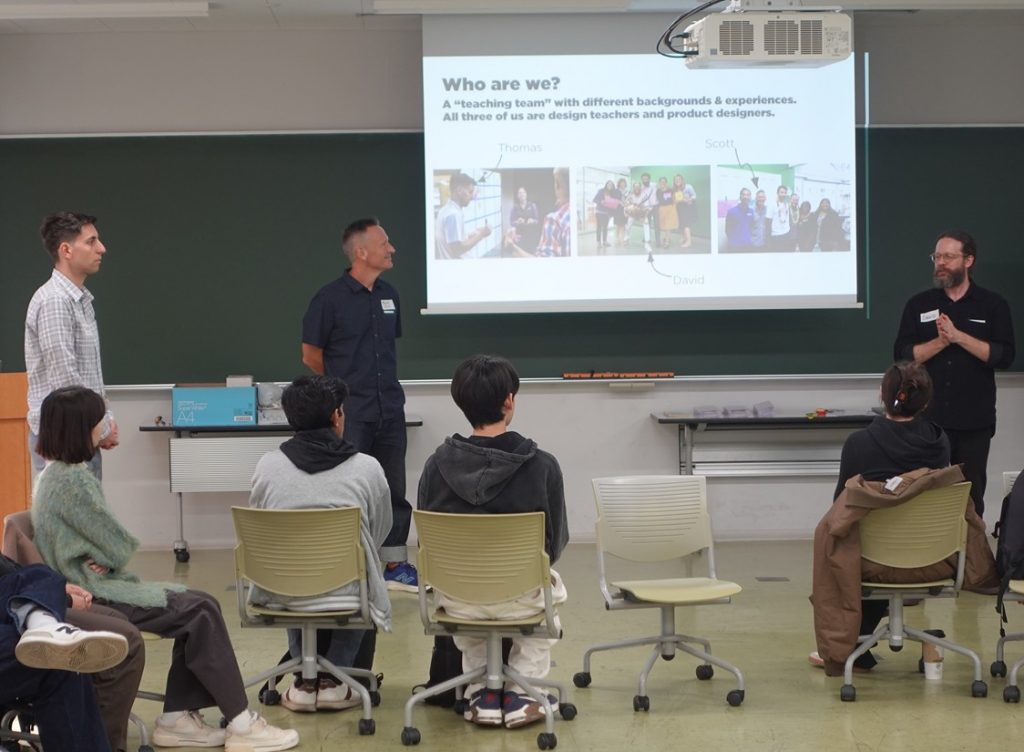
On December 6 and 7, 2025, Thomas Both, David Janka (from d.school at Stanford University), and Scott Witthoft (from previously University of Texas) held a workshop on design thinking at the Academy for Leadership, Institute of Science Tokyo.
My name is David Pohl, and I am a second-year master's student in Computer Science at Science Tokyo. In this article, I will share an overview of what happened during this memorable weekend. Given the workshop's great reception this year and in previous years, it is likely that Thomas, David, and Scott will return next year. I will therefore try to strike a balance between explaining why you should attend and not revealing every detail, so that future participants can experience the workshop dynamics firsthand.
While some people may be hesitant to commit a weekend to a workshop, I would strongly encourage you not to consider this event a class. This experience can change how you approach problems in your personal, academic, and professional life, so please view it as an investment in yourself.
Day 1
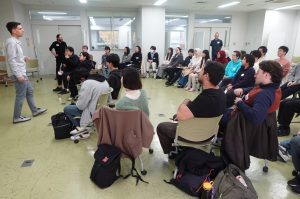
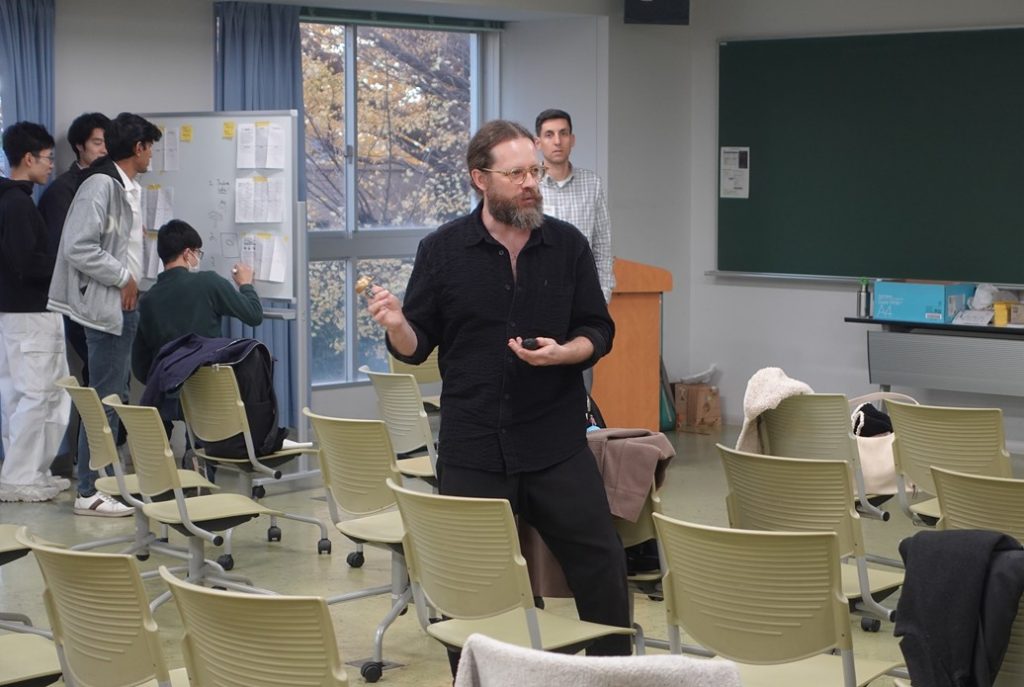
On Saturday, we met at 9 AM on the Ōokayama Campus. We began at 9:30 AM with a warm-up exercise. We were instructed to pair up with a random person in the room and improvise an imaginary situation, building on each other's ideas as the conversation unfolded. Whether one calls this a warm-up or an icebreaker, it does not come naturally to many computer scientists. I am certainly not an actor, and similar exercises in recruiting events have often felt awkward to me. Here, however, the atmosphere was different. Everyone had chosen to be there, which established a sense of connection within the group.
We were then introduced to some definitions and methods of design thinking, which were intentionally brief to emphasize that there is no single definition or correct way to practice design thinking. Instead, it is a collection of approaches for understanding problems and exploring solutions. We were introduced to a set of eight methods, all of which we would experience through hands-on activities over the two days.
Next, we created our own business cards. After writing down standard information, such as name and occupation, on the front, we were asked to write about what fascinates us as individuals on the backside. Like others, I initially struggled to understand the purpose of this task, but this uncertainty recurred throughout the workshop and was precisely what made the experience so engaging. The reasoning behind these activities often became clear later, when their connection to design thinking emerged.
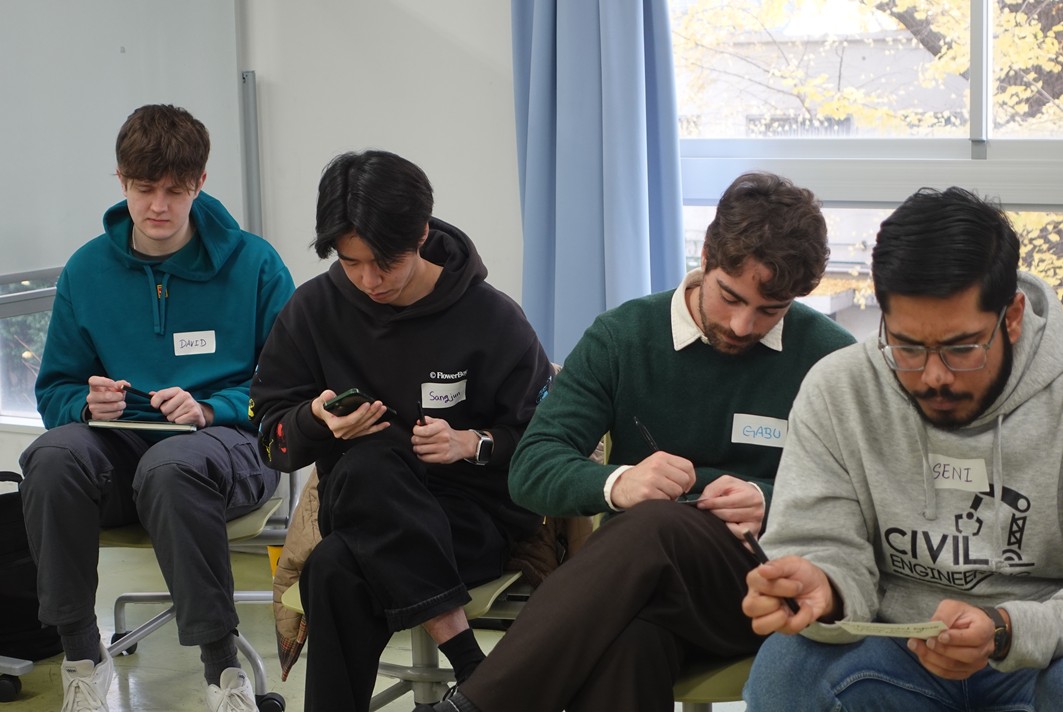
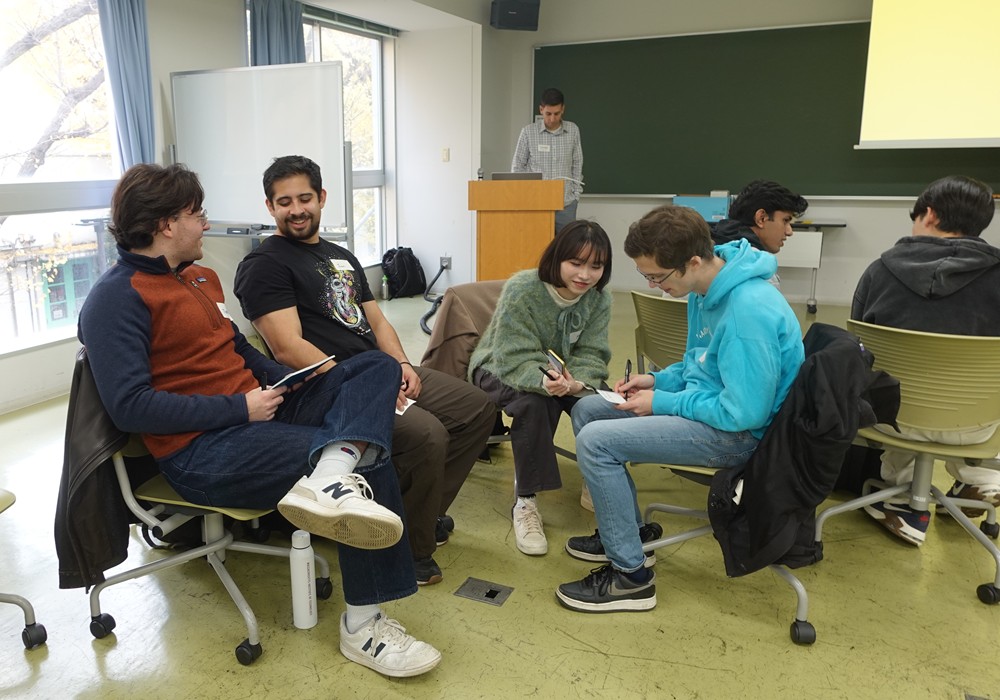
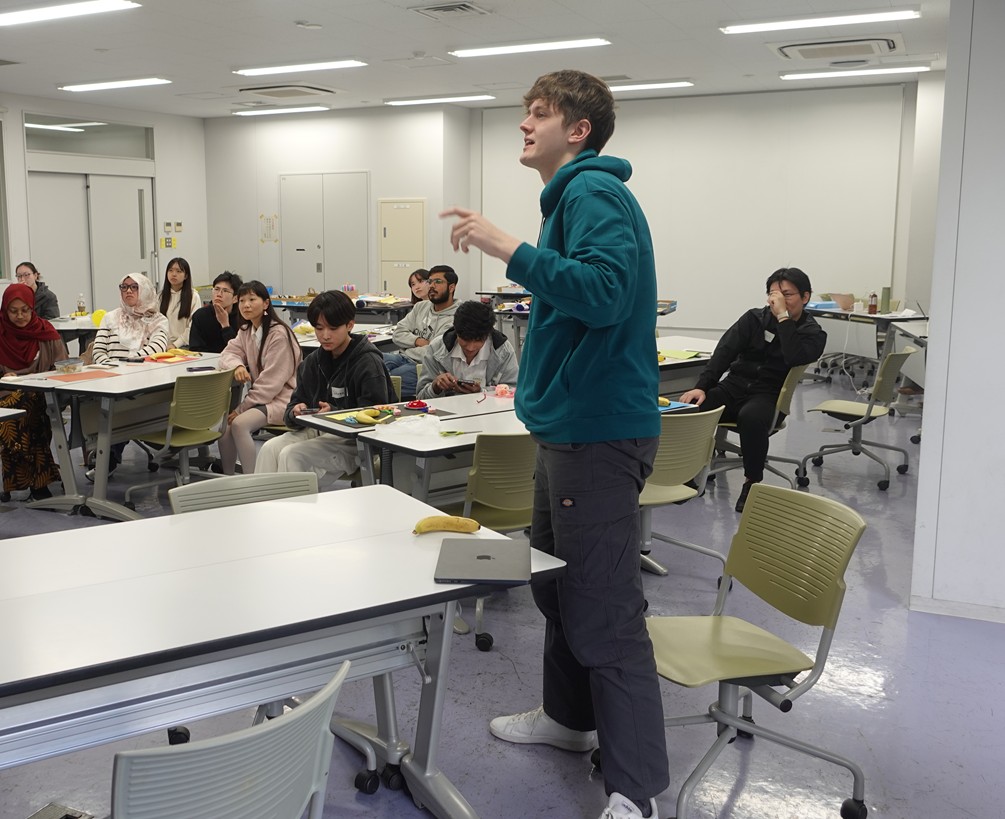
Right after that, we were asked to create a print advertisement for a banana, keeping our personal fascinations in mind from the business cards. We then thoroughly reviewed what everyone had produced within a 20-minute time frame. Despite the time pressure, people came up with some very creative ideas. More importantly, the exercise demonstrated how differently we approached the same problem, which was primarily due to the instruction to keep our individual fascinations in mind.
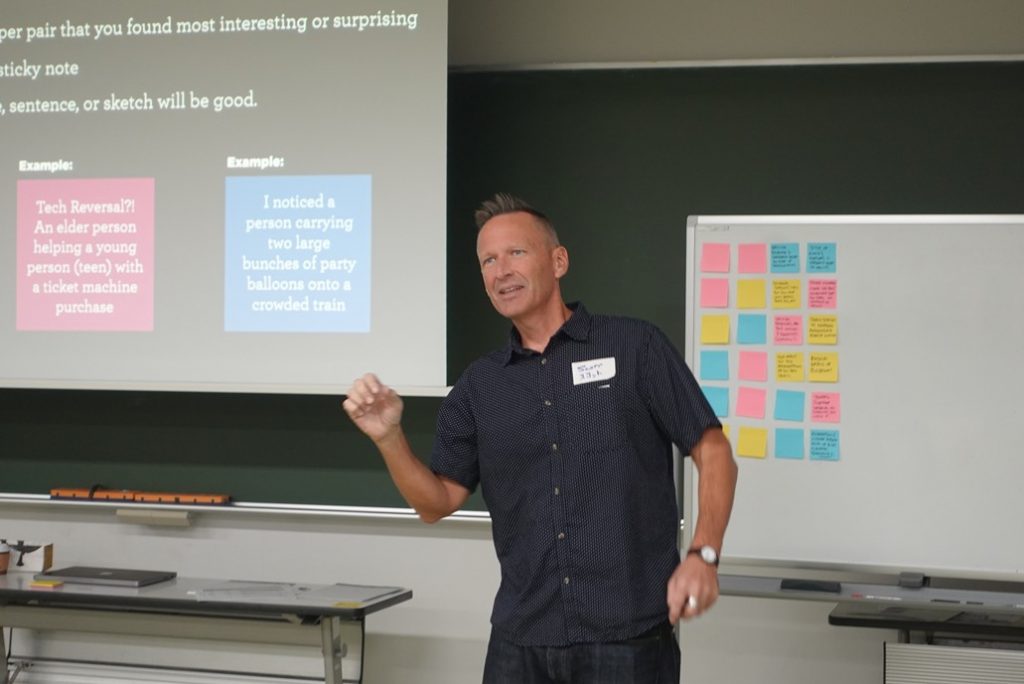
In the afternoon, we separated into groups. We took a field trip to one of the selected locations in Meguro-ku, where our task was to observe and document our environment. At first, it was overwhelming. There was so much happening that it was unclear what to focus on. To guide us, we were introduced to two observation frameworks: the AEIOU framework (Activities, Environments, Interactions, Objects, Users) and the What–How–Why framework. These structures helped us translate our impressions into concrete observations that we could later build upon. The practice of stepping back and observing systematically is valuable not only for design but also for research and everyday situations.
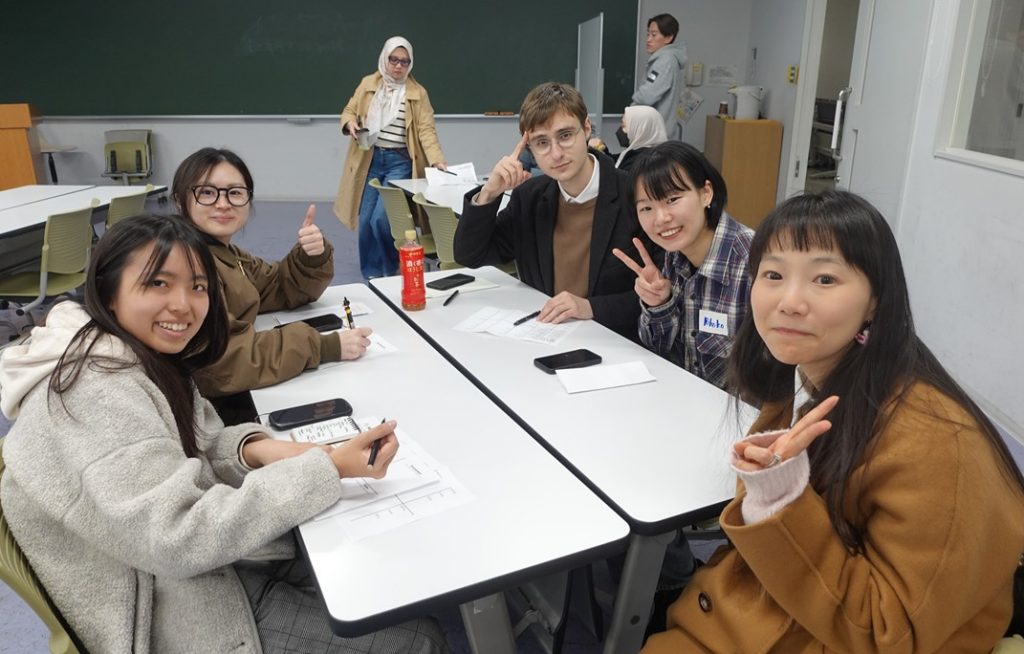
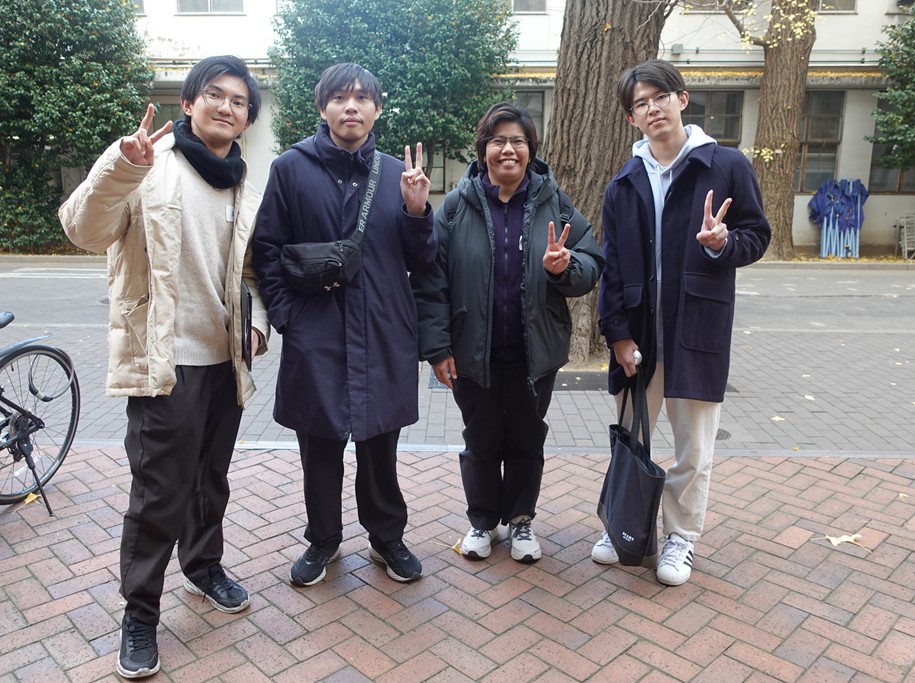
The final session of the day focused on synthesizing observations, taught by Scott. We explored methods such as typologies and spectrum mapping to make sense of the collected data and identify underlying problems. Although I was familiar with clustering techniques, this session introduced me to entirely new ways of structuring thoughts and insights. Specifically, I found the spectra technique to be a strong alternative, particularly when trying to make sense of diverse ideas or concepts on a physical whiteboard. It forces you to decide which aspects to focus on and to position items along continuous axes. This approach allows items to be mapped onto a two-dimensional space, making patterns and relationships highly intuitive.
Day 2
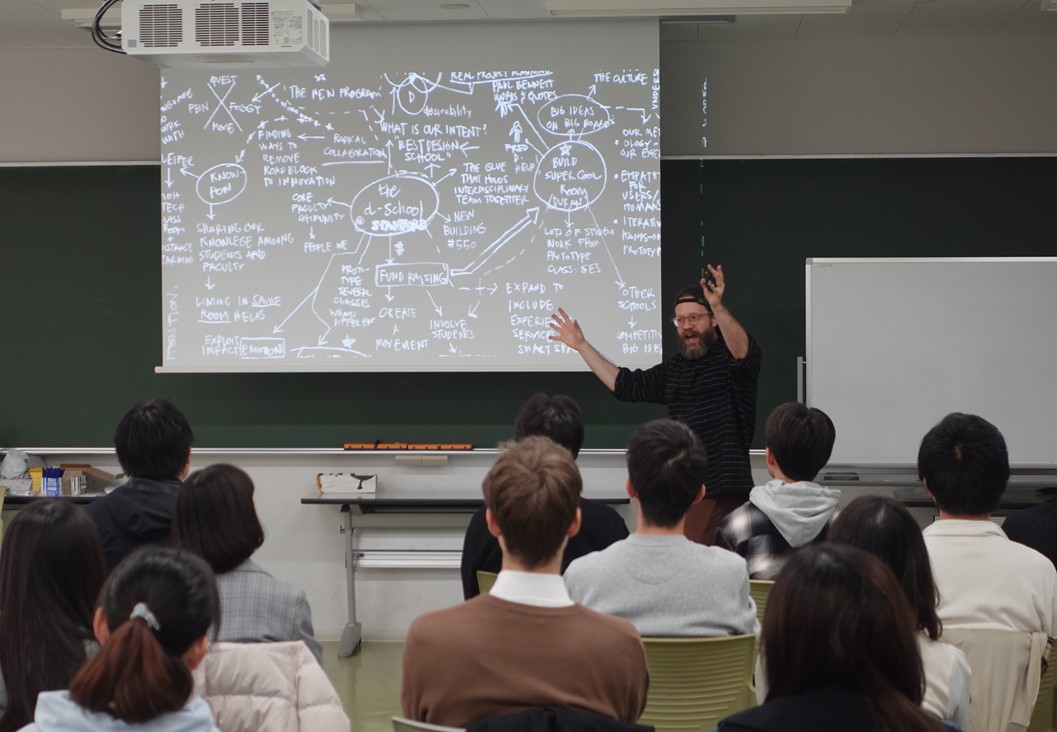
On the second day, we began with the concept of radical ideation, led by David. He taught us about the importance of separating idea generation from idea selection. This practice became crucial as we worked in groups to address open-ended societal challenges. During the brainstorming session, we were instructed not to question others' ideas, and, even more challenging, not to question our own. The principle was simple: noting down ideas is cheap, as filtering can be done later. This exercise was my personal highlight of the workshop, as I often overthink and discard my ideas too early.
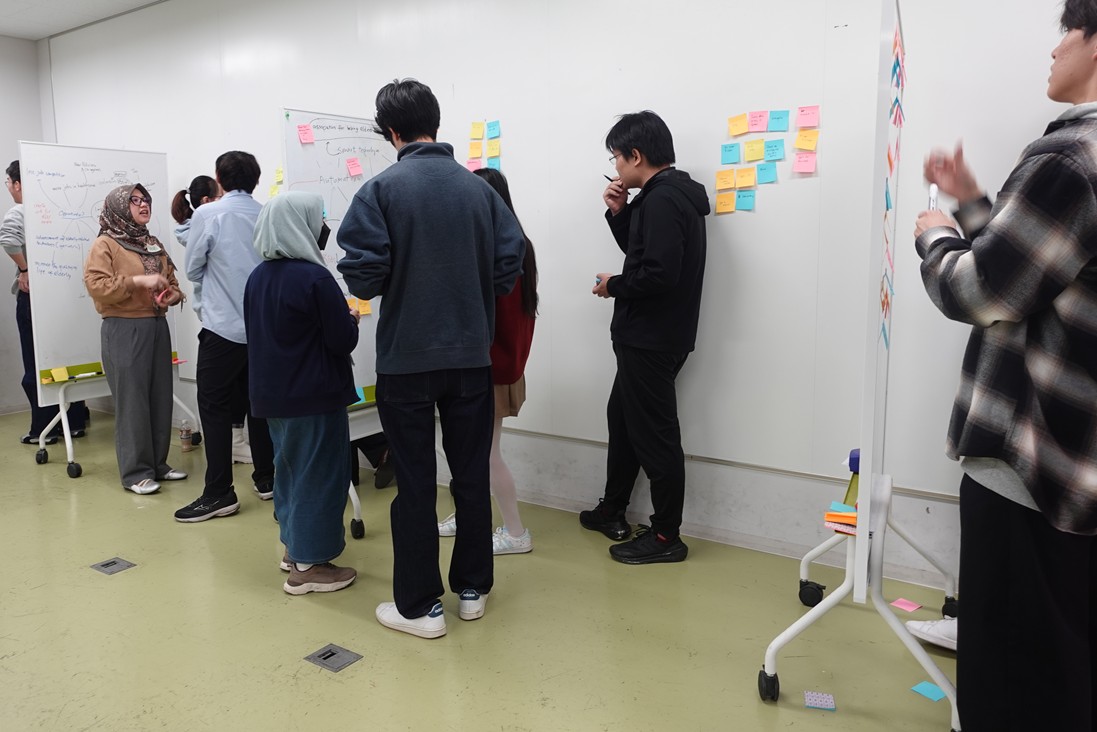
The next activity initially pushed me out of my comfort zone, as I am far from being talented in arts and crafts. However, it soon became clear that the exercise was not about dexterity. It was about how we approached a new problem and communicated with each other. We had to design a prototype to help a hypothetical family prepare for an emergency. Working with a new partner under time pressure highlighted the importance of clear communication and rapid collaboration. Afterward, we presented each other's prototypes to another team. This activity showed how strongly individual backgrounds and perspectives influence solutions, especially when time is limited.
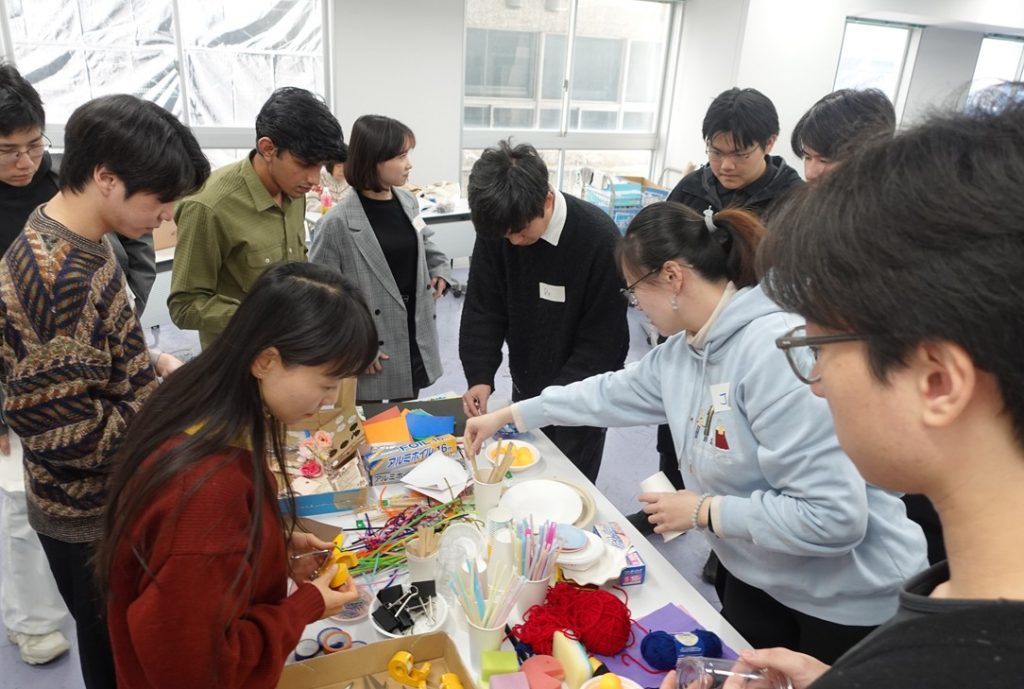
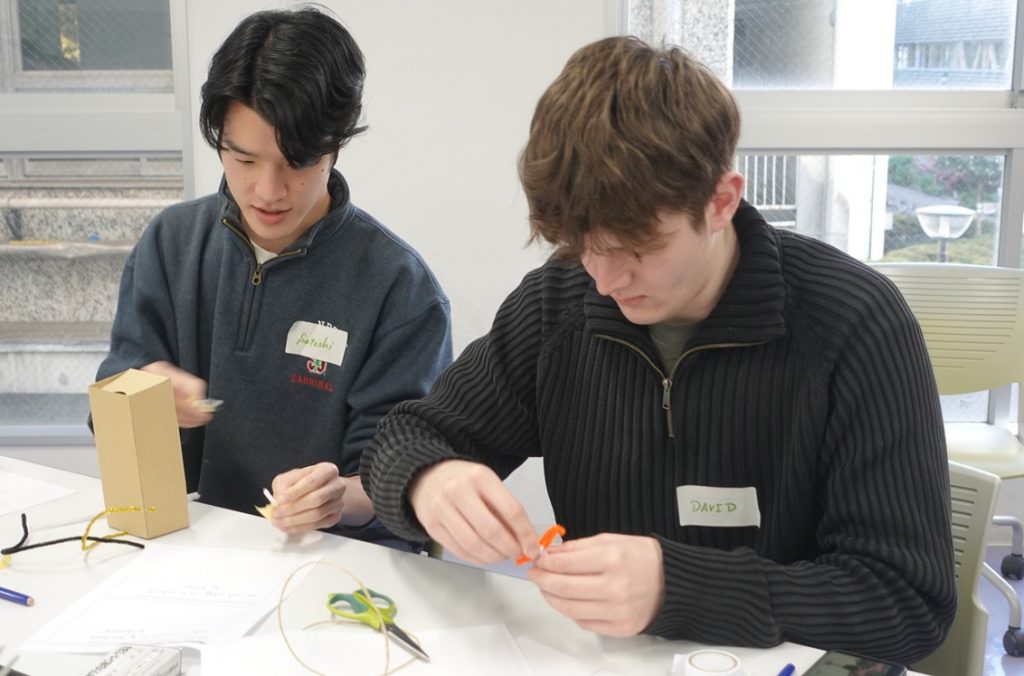
Later, we learned about the why–how ladder, a method for systematically structuring problems. We examined the efforts of a Japanese newspaper to prepare citizens for catastrophic events. Specifically, we identified the campaign's higher-level motivations and the concrete subproblems associated with the mission. Due to my personal experience in a consulting internship, this concept was very familiar to me. However, it reinforced an important lesson: keeping the broader context in mind is essential when approaching complex problems.
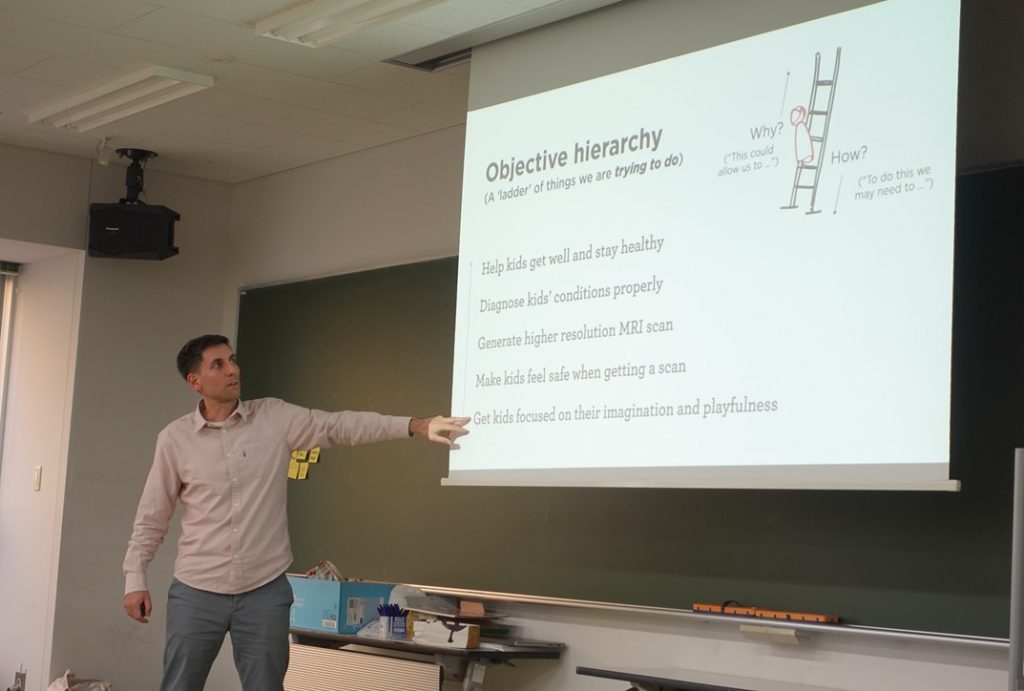
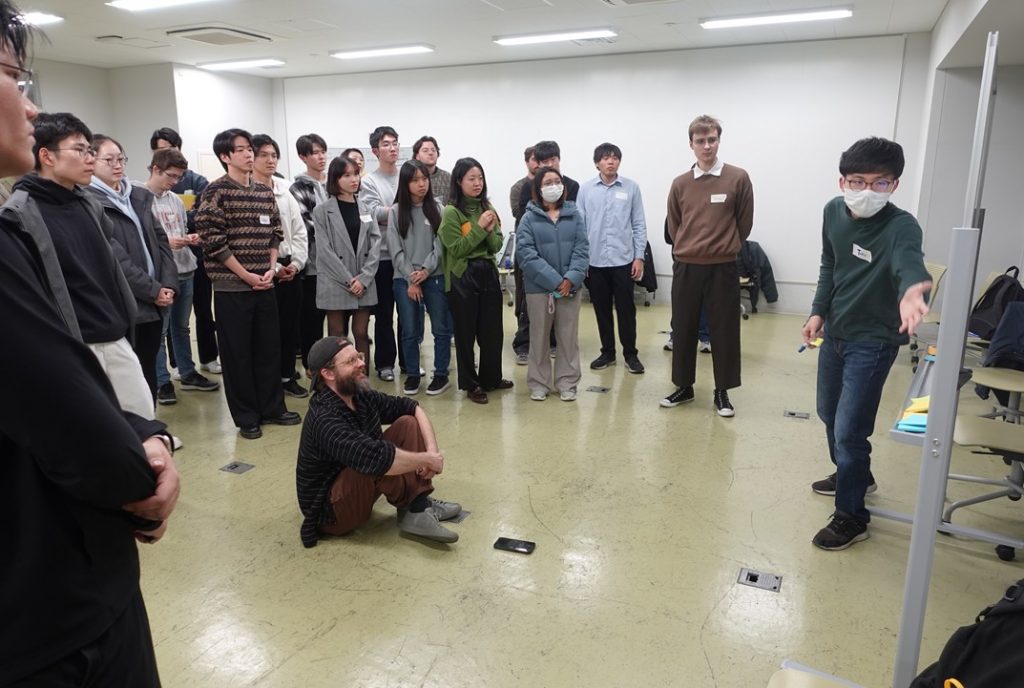
Throughout the weekend, we engaged in a wide range of exercises. This variety was what made the workshop valuable for participants from all backgrounds, as it allowed everyone to connect with different parts based on their own experience and interests. For instance, I found the ideation exercise particularly central, whereas another participant considered the synthesizing session to be their main takeaway.
Lastly, we were divided into four groups to reflect on the outcomes of the weekend. My group examined how the participants' understanding of the term design had changed. We asked what design meant to them before the workshop, how their perception had shifted, and which exercises contributed most to this change. To boil it down, many participants initially viewed design as a term tied to art, separate from science. By the end, they saw it as a practical toolkit for problem-solving. I was struck by how our perspective had evolved.
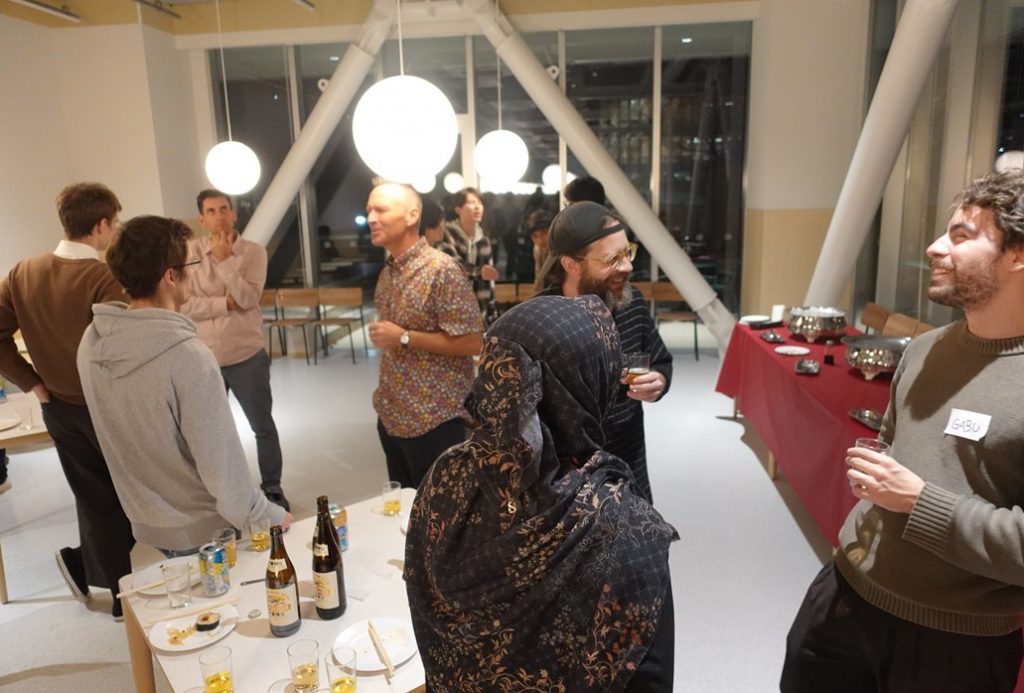
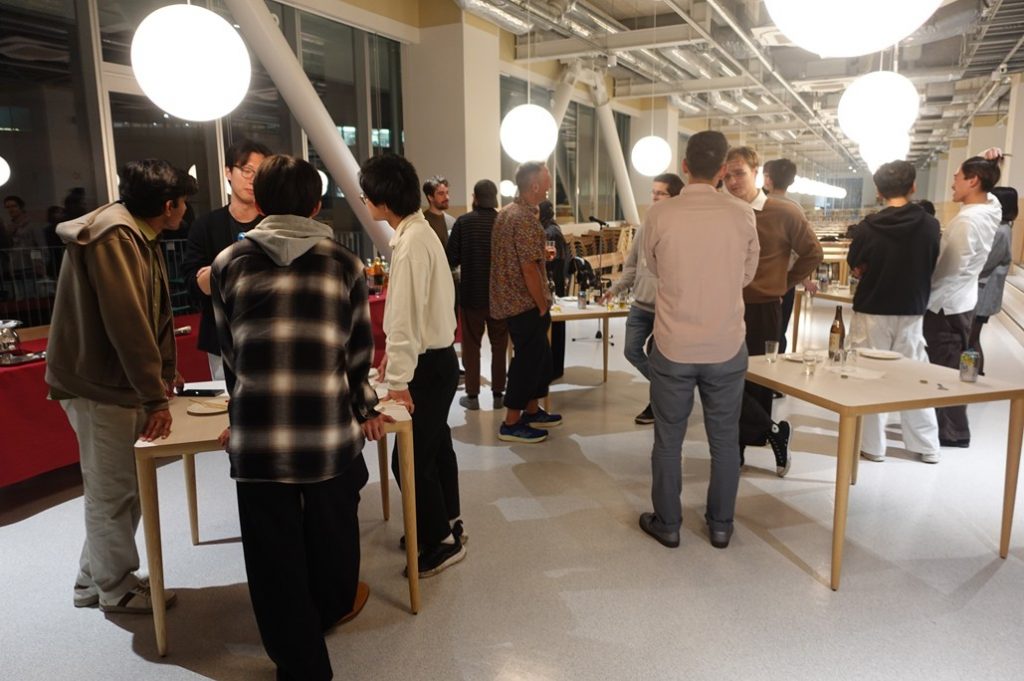
The weekend concluded with dinner and drinks at the Tsubame Cafeteria, offering a more informal setting to connect with fellow participants and instructors, and making for an enjoyable end to an intense and inspiring workshop.
In conclusion, I highly recommend this workshop to every student, regardless of their field of study. Thank you to the lecturers, Thomas, David, and Scott, as well as Prof. Yamada, for providing this opportunity at Science Tokyo.
Written by:
David Pohl, M2, Computer Science, School of Computing