
*英語のみ
2-day workshop of “Design Thinking for Your Creative Practice 2025” was held on December 6 and December 7, 2025. This workshop can be applied as a part of the requirements for passing one of the ToTAL/Entrepreneurship Courses below:
-ENT.L202 Bachelor’s Fundamental Group Work for Leadership B
-ENT.V204 Bachelor’s Fundamental Group Work for Value Creation D
-TAL.A501/TAL.A601 Master’s/Doctoral Essential Group Work for Leadership F
-TAL.S506/TAL.S510 Recognition of Social Issues Workshop B/D
-TAL.W502/TAL.W503 Fundamental Group Work for Leadership I/II
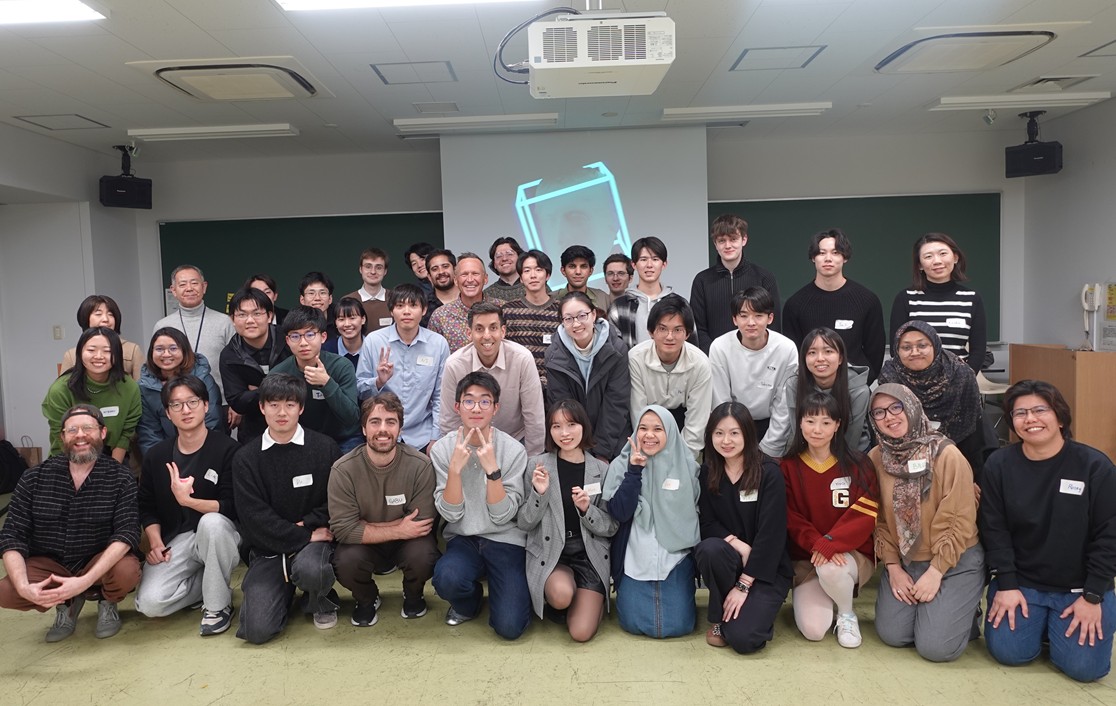
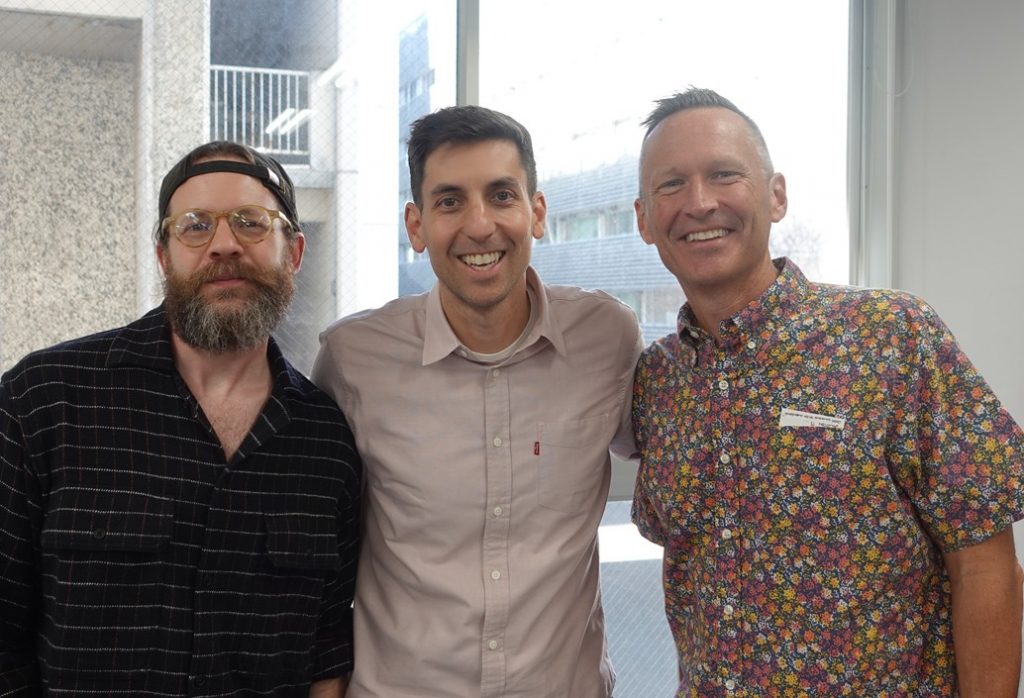
| Facilitators | Thomas Both and David Janka (d.school, Stanford Univ.), Scott Witthoft (previously The University of Texas) |
| Date and Time | Day 1: Saturday, December 6, 2025, 9:00 a.m. – 6:00 p.m. Day 2: Sunday, December 7, 2025, 9:00 a.m. – 6:00 p.m. |
| Venue | S4-202 & S4-203, South Building 4, Ookayama Campus |
Overview
Everyone has their own way of defining a designer, often limited by the knowledge or perspective they already have. However, through a two-day intensive workshop from 9:00 am to 6:00 pm, participants engaged in various activities designed to enhance our creativity and help us with ideation. The workshop also guided us in understanding and applying the mindset of a designer as defined by the design thinking approach taught at Stanford d.school. Here we were introduced the fundamental concepts of skills and methods that designer use which we can apply to our way of thinking creatively.
Day 1
The workshop began with an introduction that included an overview of the participants as well as an introduction of each facilitator. As part of this session, we were asked to create our “business card”, defining how we see ourselves in terms of professional branding. On the back of the card, we included our “hidden personal branding”, which we then shared with a partner. This activity encourages us to think creatively about who we are beyond our labels. This early morning session also provided a detailed explanation of all the activities planned for the day and the following day, including an overview of the workshop and what we needed to understand about design process, also the skills and methods involved.
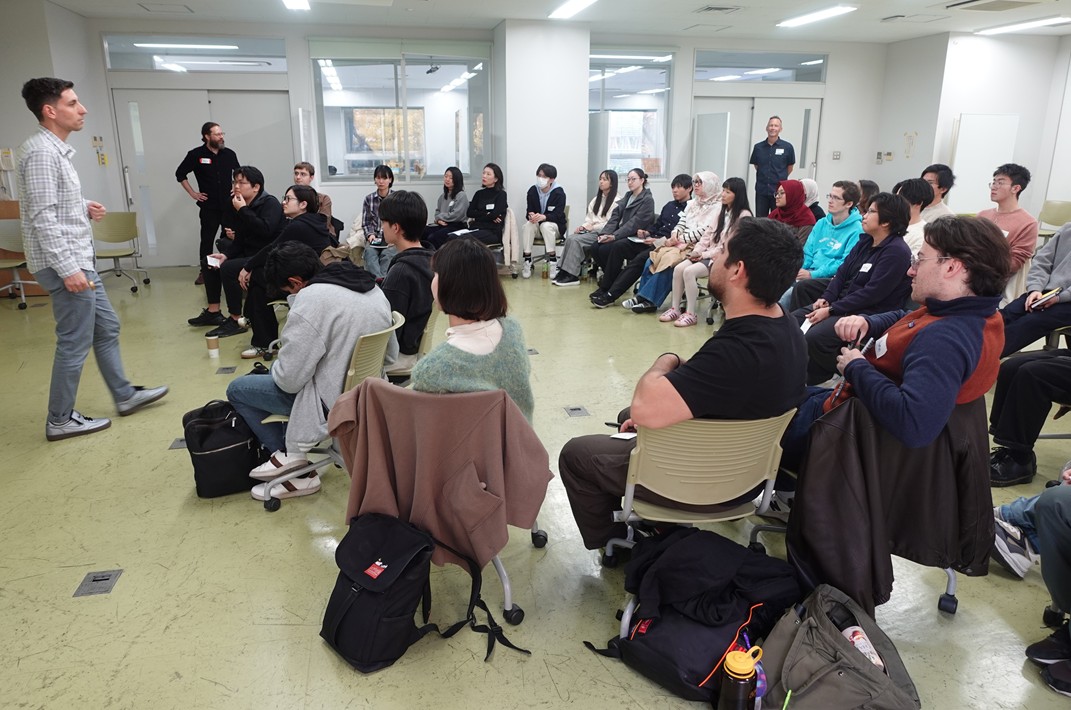
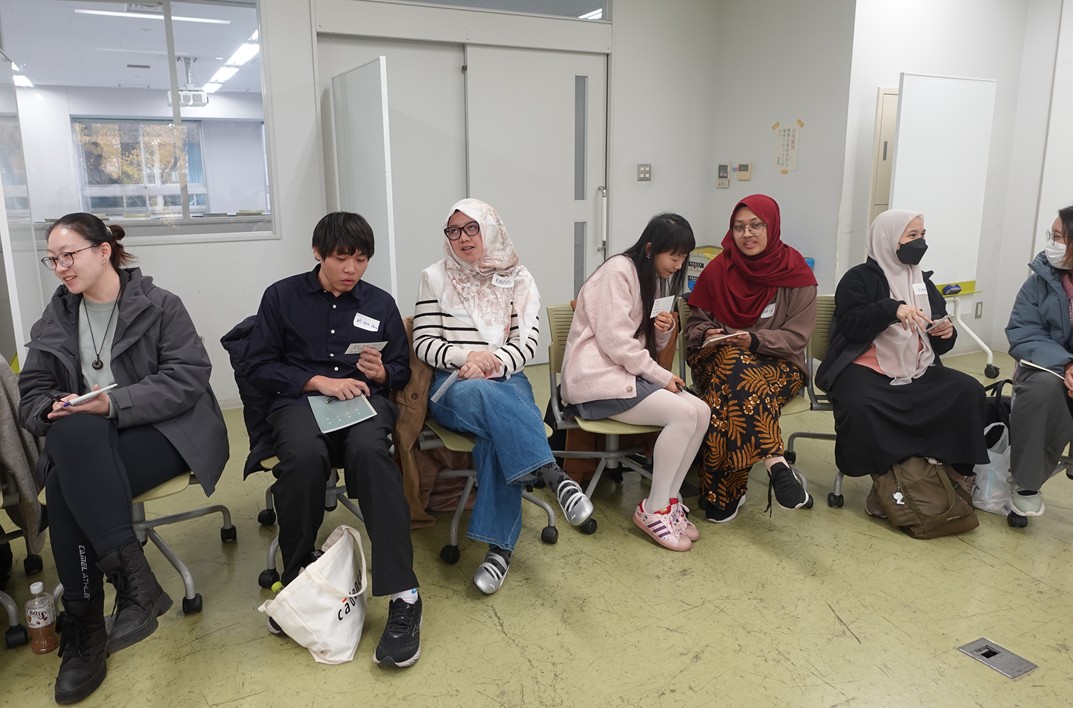
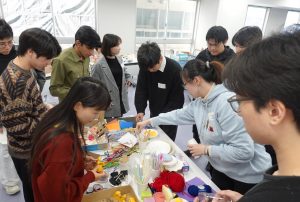
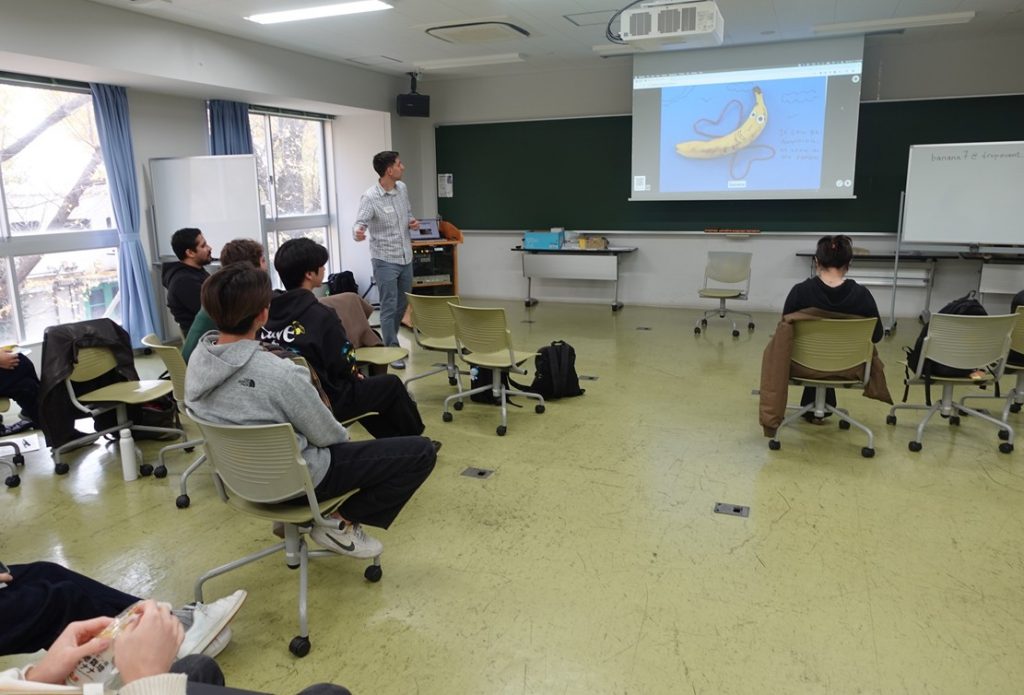
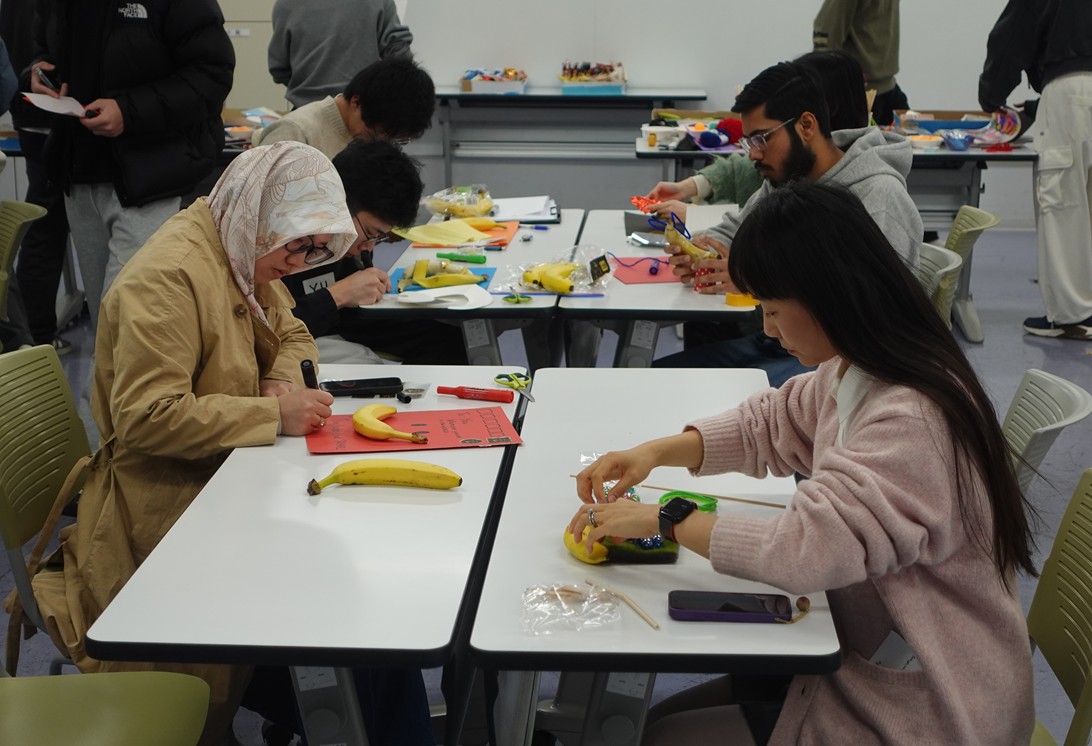
A week prior to the workshop day, Professor Keisuke Yamada sent us a reminder along with preparation instructions for the workshop. It was mentioned that we needed to bring a banana, with no further explanation of what it would be used for. It turned out that the banana would serve as a medium for creating an advertisement based on our personal fascinations. Everyone brought their own imagination into the task, and it was surprising to see that none of the advertisements were the same. The explanations behind each ad truly reflected individual fascinations. Some were related to hobbies, others to current activities, and mine was connected to my previous experience. This activity clearly showed how differently each person thinks and expresses ideas.
In the afternoon session, we participated in an activity called practicing noticing. The participants were divided into small groups and asked to choose one station from several options for fieldwork observation. Each group received an envelope containing instructions that we needed to fill out, an exercise we had practiced previously in class before going to the field. I believe this activity is especially useful, as people are often too busy with their work to pay close attention to their surroundings. I personally enjoyed the exercise because I like observing people and the environment, and I found it refreshing, almost like a form of meditation that helps clear the mind from daily busyness.
To close the first day of the workshop, we returned to the classroom setting and learned how to synthesize the information that we had gathered. We explored different approaches such as typologies, spectrum, and opportunity statement to summarize and visualize our fieldwork experiences and share with the class. The session helped me recognize interesting aspects of our surroundings that we might otherwise overlook, such as how people behave and interact in public space, details that often go unnoticed, and environmental factors including weather conditions. Some of these approaches were new to many of us, including myself. I learned many useful insights from this debrief session and realized that these methods can be applied not only in academic settings but also in daily life and professional work. As someone who works in a lab, I understand that even small details can matter and contribute significantly to our experiments.
Day 2
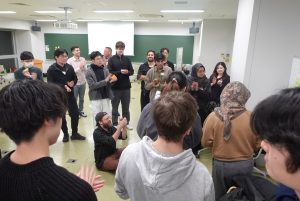
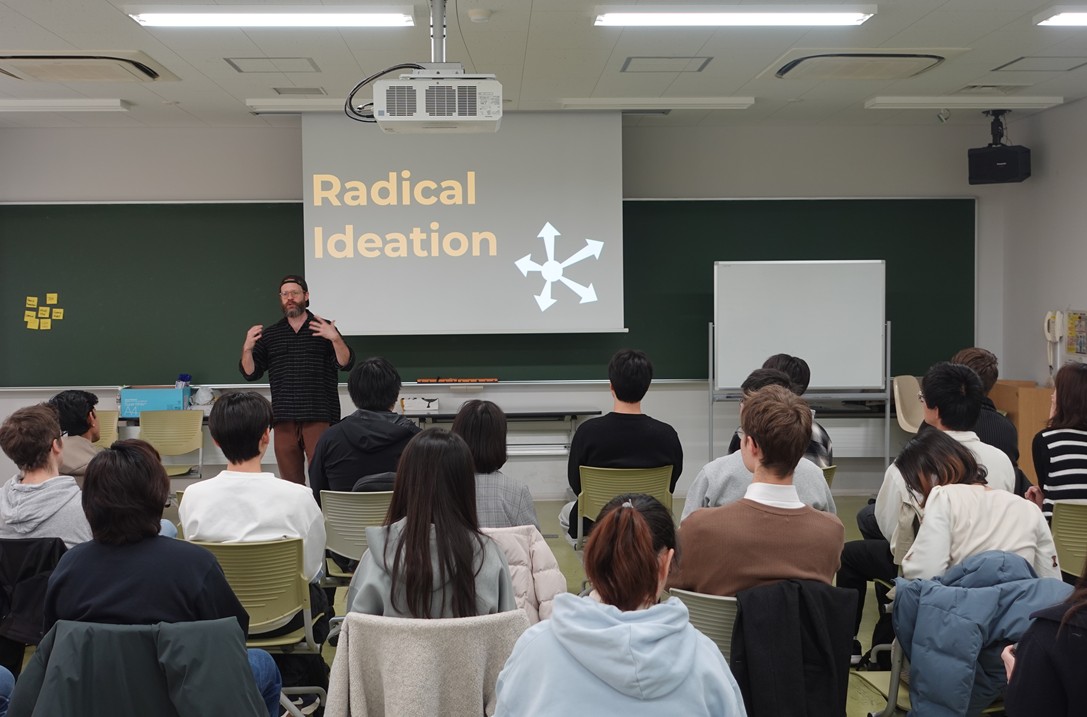
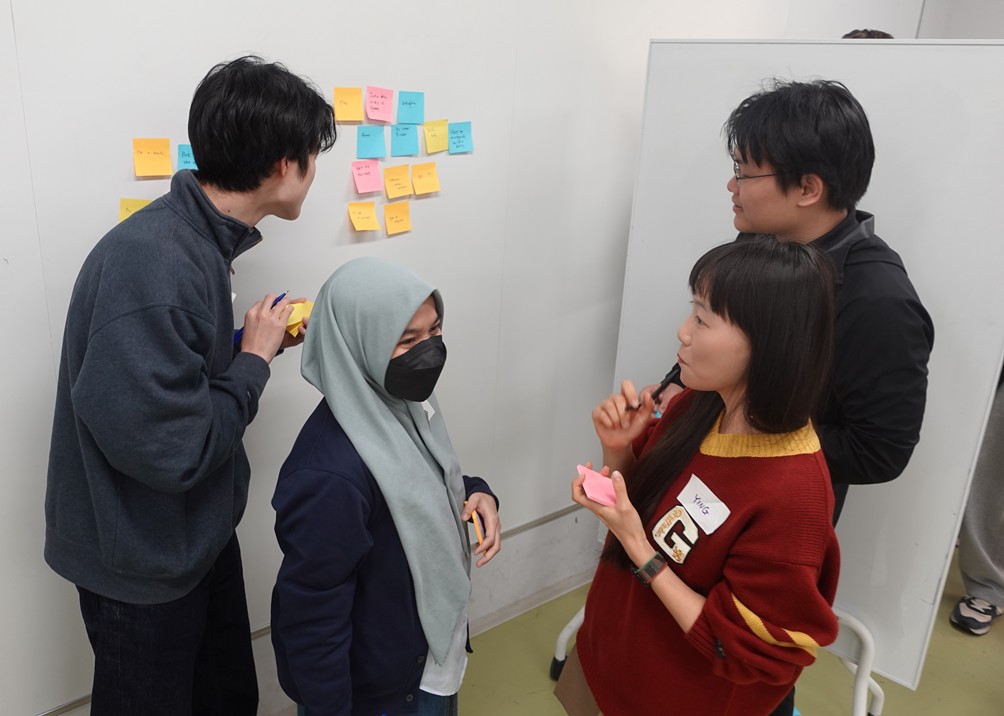
After a long day yesterday, some participants might have felt tired and not in the same state of mind. To bring everyone to a similar level of energy and focus, we began the second morning with an engaging group activity that involved movement, idea generation, and coordination through creating a gesture or posture also draw some picture that represent the given words. This activity helped relax both our bodies and minds. Then we were randomly assigned into groups and began the first activity on radical ideation, which involved mind mapping and group brainstorming around a given topic. While the activities may have been familiar to most people, this exercise encouraged us to explore our wildest ideas and allow thoughts to emerge freely.
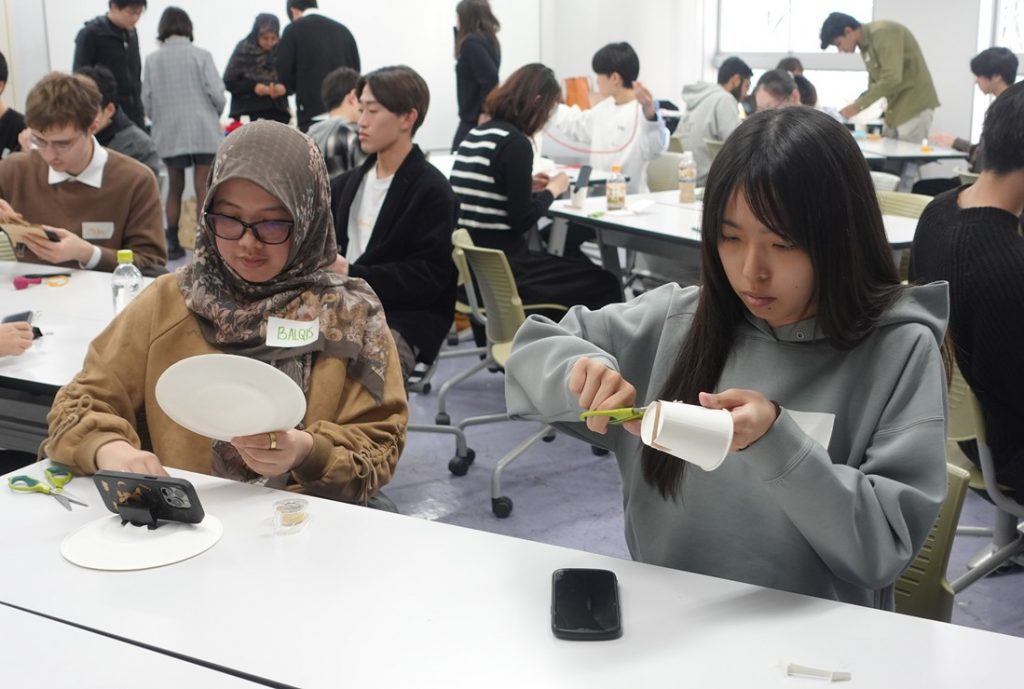
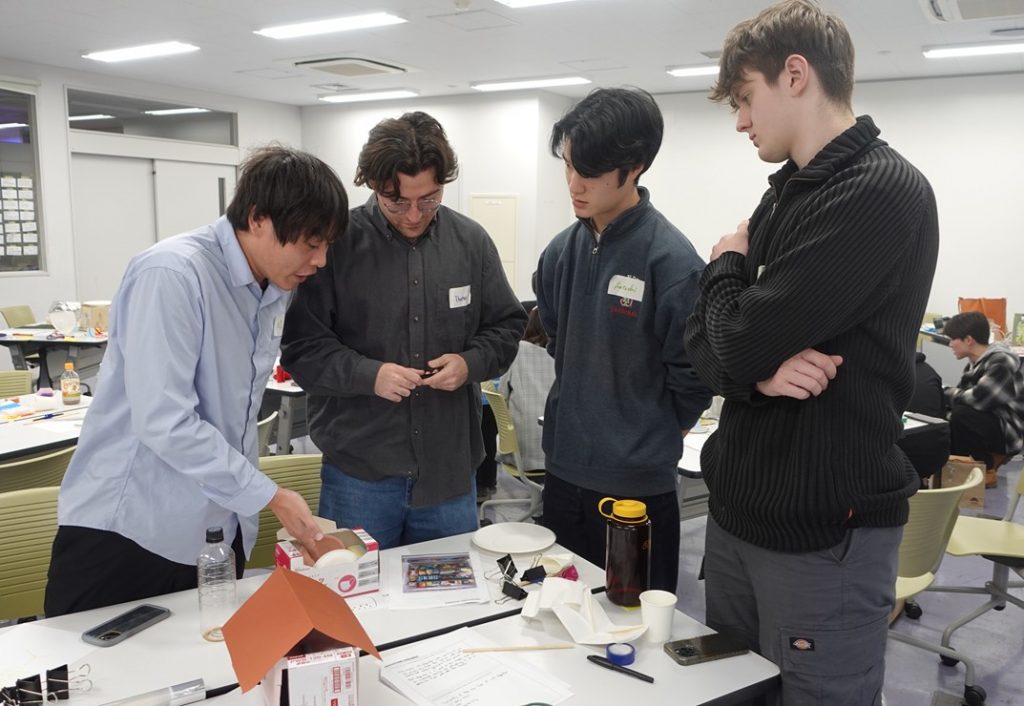
Next, we learned about prototyping possibilities, training our brains to work with multiples and to create physical prototypes, first individually and then with a partner. This prototyping challenge shifted many participants’ perceptions of the designer that they previously had. During the individual prototyping work, I realized that my ideas were strongly influenced by my daily experiences and the knowledge that I have gained throughout my academic life. The paired prototyping activity enhances my communication skills, which I found particularly useful for project coordination. When presenting our prototype to another team, I discovered that discussions with others broadened our perspective and provided constructive feedback that improved our concepts. I was pleased that my partner and I were able to share and combine our ideas equally to create the final prototype.
In the afternoon session, we explored problem reframing using the “why-how laddering” method. We first practiced this technique as a whole class using a shared case and then applied it to a different case in a smaller group. Initially, I found why-how laddering quite challenging. However, through group discussions and guidance from the facilitators, I gradually learned how to apply the method effectively. The why-how laddering method helps us break down a broad or unclear problem into different levels. By repeatedly asking “why” and “how”, we explored both the underlying purpose of a problem and possible ways to address it. This experience of using why-how laddering on a broad topic was helpful when I apply the method to my own work, especially when explaining an academic project to people outside my field by connecting high-level goals to concrete actions more systematically.
We closed the two-days’ workshop with reflection questions or so-called goodbye game. I got to learn the insight from other participants on how the benefit from the workshop.
Reflections
Personally, throughout the workshop, I learned that practicing different approaches in both individual and team settings can enhance our ideation, strengthen design thinking, and help us explore creativity more openly through creating, iterating, and sketching to connect our ideas while engaging with surroundings. One key idea from the facilitators that I highlighted was the statement, “your creative potential is not limited to your profession”.
Some people may see themselves as perfectionists, but this workshop taught me that allowing failure and embracing is acceptable and even valuable. Making mistakes early and sharing unfinished ideas enables us to gain meaningful insights from feedback and ultimately build greater confidence in the final outcome. Learning from others is just as important as self-learning, and this experience reminded me not to limit my inner potential by placing unnecessary constraints on myself.
Additional Note
From the goodbye game, some Japanese students mentioned that it would be helpful to improve our English skills before joining the workshop, as it was conducted entirely in English. However, I would still encourage others not to limit themselves or avoiding joining the workshop because of their English ability. The knowledge and experience gained from the workshop are far greater than the fear of not fully understanding everything at first. I strongly recommend participating in this workshop to experience the activities firsthand, as there are many aspects that cannot be fully conveyed through explanation alone.
Written by:
Mualifah, D1, School of Life Science and Technology, ToTAL 8th Cohort