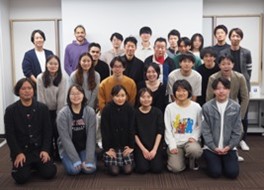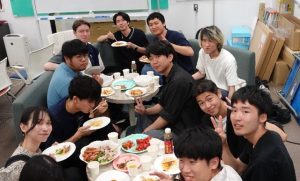

6 sessions of Leadership for Creating a Collaborative Research Environment, which is part of the ToTAL course, were held from May 19 to July 28, 2025.
| Facilitators | Shotaro Yagi and Kana Hasebe (Copilot Inc.) |
| Date and Time | 6 sessions, from May 19 to July 28, 2025, 18:00–20:00 |
| Venue | Room S6-309A, 3rd Floor, South Building 6, Ookayama Campus |
Overview
We often stop thinking deeply about unexpected chance or relationships with others which we often see as “unexpectable events”. In this workshop, participants did not ignore them but learned new viewpoints in which they regard them as sources deepening their research. They changed mind little by little and planned to do next by sharing other participants’ reflection.
Report (6 sessions)
Session 1:Staring up projects (May 19)
Objective: To reframe research themes from “individual” correctness to contributions within “relationships”.
Contents: We began by sharing the purpose and overview of this workshop. Then, each participant reflected on their own research theme by separating it into two aspects: outcome (belonging to the individual) and process (emerging through relationships), and they discussed it with other students. In particular, we conducted exercises to reconsider our research as a field (environment, personal history, direction, and new connections). We then put into words how our approach may change before and after the workshop.
Learnings: I learned that while final outcomes may belong to the individual, the process of achieving them is shaped by relationships and interactions with others. I also realized that questions change depending on whom I asked them with and in what setting, and that new possibilities for contribution arise. Moreover, by sharing my research with others, I gained new perspectives and felt that I stand in start points of change and encounters.
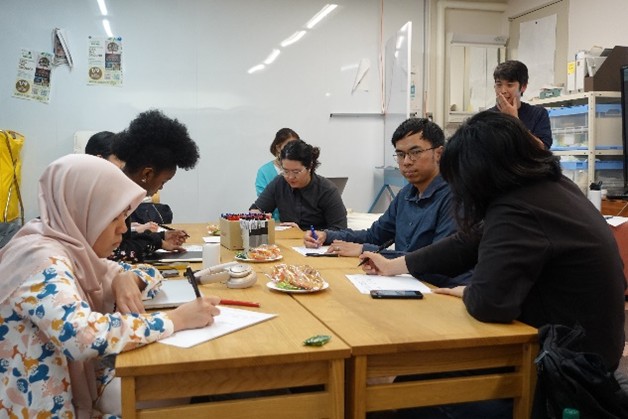
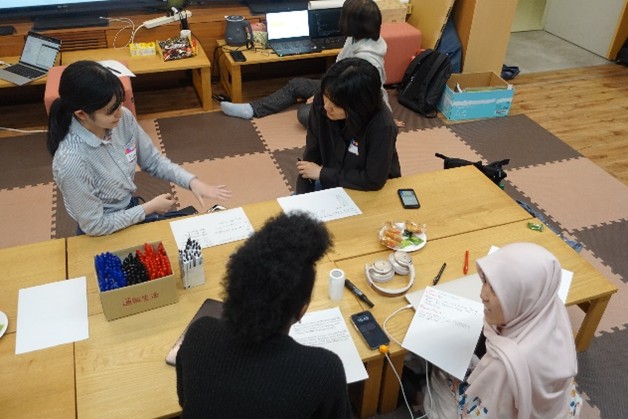
Session 2:Identifying frictions and planning actions (May 26)
Objective: To identify factors that cause project stagnation (frictions) and create specific plans to encourage them.
Contents: We aimed to extract actionable “tasks” from previously identified “problems” and put the “frictions” into words — factors preventing desired actions. After identifying these frictions, we set milestones to remove them.
Learnings: Defining factors preventing desired actions as “friction”, I recognized that identifying and improving them is the key to project proceeding. By examining issues from psychological and environmental perspectives, I could identify tasks and redesign milestones more specifically based on them.
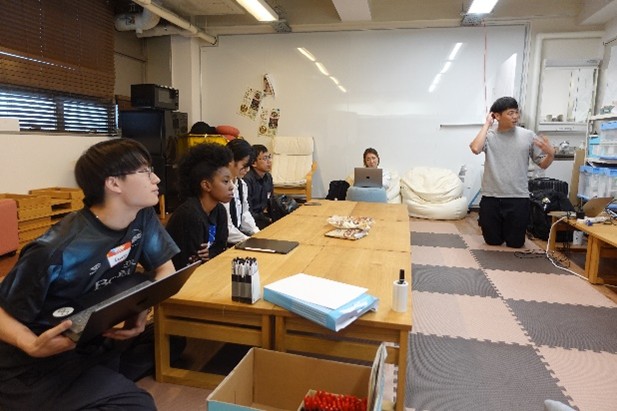
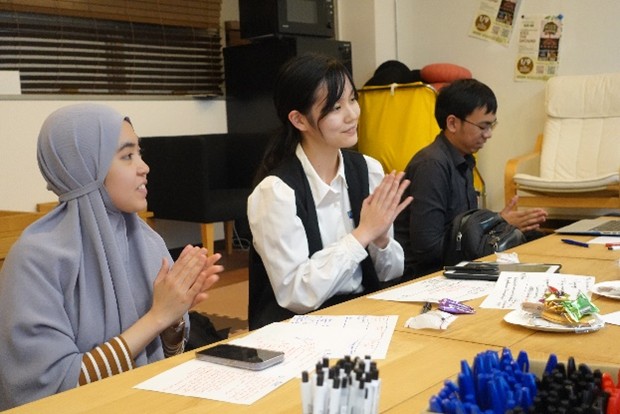
Session 3:Reflecting plans (Reflection and Diffraction) (June 16)
Objective: To learn reflection methods focusing on hidden assumptions and unconscious biases, instead of evaluating the results solely based on whether they were executed as planned.
Contents: We reviewed our progress based on the milestones in Session 2. We learned two reflection methods: Reflection and Diffraction. Participants shared insights from both approaches.
Learnings: I realized that Reflection focuses on good/bad against standards, while Diffraction explores how specific viewpoints or facts are formed, revealing new possibilities. Sharing findings from both methods helped me realize points which I could not find and reconsider my milestones.
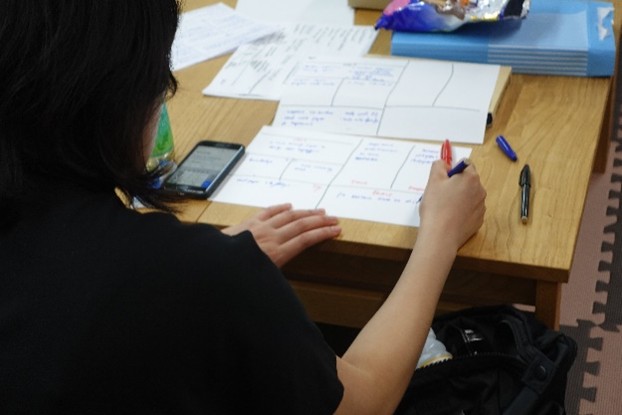
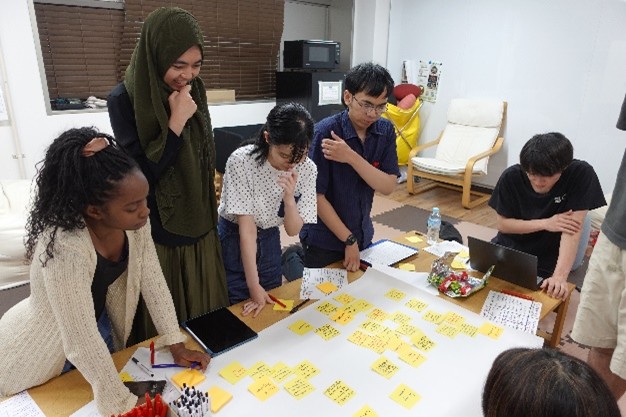
Session 4:Visualizing projects and redesigning milestones (June 30)
Objective: To manage projects by visualizing not only specific tasks but also psychological and environmental factors.
Contents: Using spreadsheets, we learned methods for reporting and managing projects. Beyond listing tasks, we redesigned milestones including psychological causes of stagnation and relational challenges.
Learnings: I understood that visualizing not only tasks but also psychological factors—such as low motivation or communication lacks—and planning specific actions for them are essential for project success.
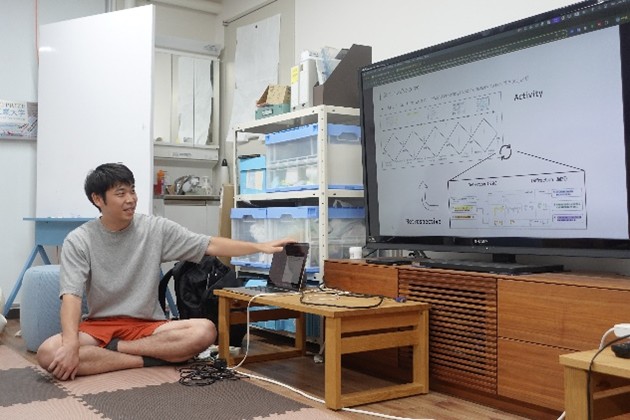
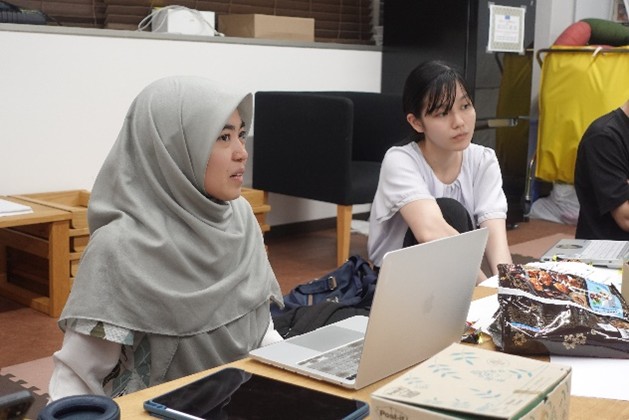
Session 5:Mechanisms of habit formation and causal loop diagrams (July 14)
Objective: To learn systems thinking to turn plans into not temporary but sustainable habits.
Contents: Through causal loop diagrams, we analyzed how individual habits or stagnation situations are maintained by various factors—people, systems, and environments.
Learnings: I discovered that both productive habits and stagnation patterns are shaped not only by individual will but also by surrounding environments and relationships. Visualizing causal structures provided a new opportunity to reflect on research processes.
Session 6:Reflection and sharing patterns (July 28)
Objective: To summarize learnings from all six sessions and define specific actions for future.
Contents: Each participant compiled personal patterns (both effective and ineffective) identified in the previous session as “pattern language” format and shared them with others. We finally reflected on the entire program, reflecting what changes most and what is highlights.
Learnings: By verbalizing learnings as specific “patterns” and sharing them, I got tools to applying workshop experiences to long-term practices. Finally, we discussed what we want to try next, and how we plan to apply our learnings from tomorrow.
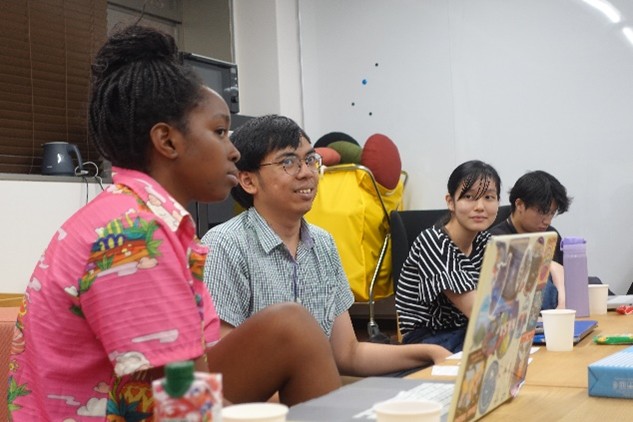
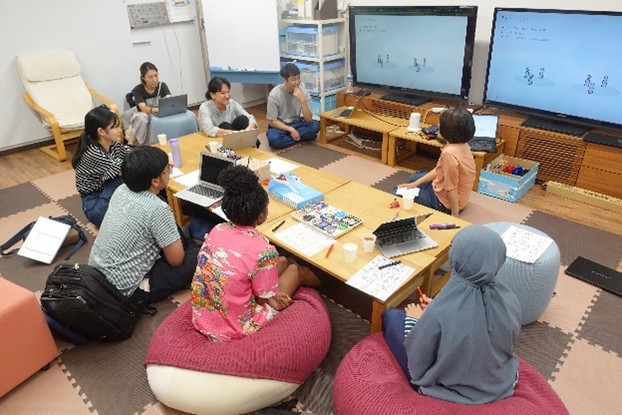
Reflections
Through this workshop, I deeply experienced a new perspective: Creating a Collaborative Research Environment. In Session 2, identifying frictions helped me transform vague feelings of “lack of motivation” into specific issues. The concept of Diffraction in Session 3 was especially meaningful. It revealed how awareness of unconscious assumptions can lead to new possibilities and totally change how I set research questions. Sessions 4 and 5 also offered tools to structure project management and habits from a relational perspective, which I found very useful for my daily research activities.
Additional Note
As a participant, I witnessed how rebuilding relationships can be the source of making stagnant projects proceed. I plan to apply to creating research by analyzing friction and taking diffraction perspectives into my own research. I highly recommend this workshop to those interested in improving their research process, exchanging ideas with other researchers, or discovering new insights into their current challenges.
Written by:
Yuta Murao, D1, School of Life Science and Technology, ToTAL 6th cohort