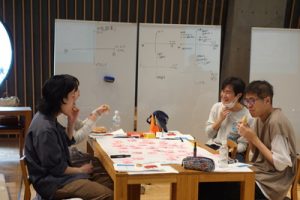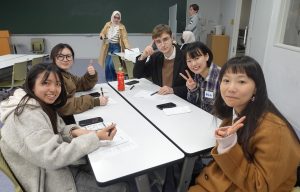

This program helps you develop the skills to understand the structure of relationships and facilitate dialogue in situations where conflict is inevitable within a team with diverse values, while remaining calm and protecting yourself.
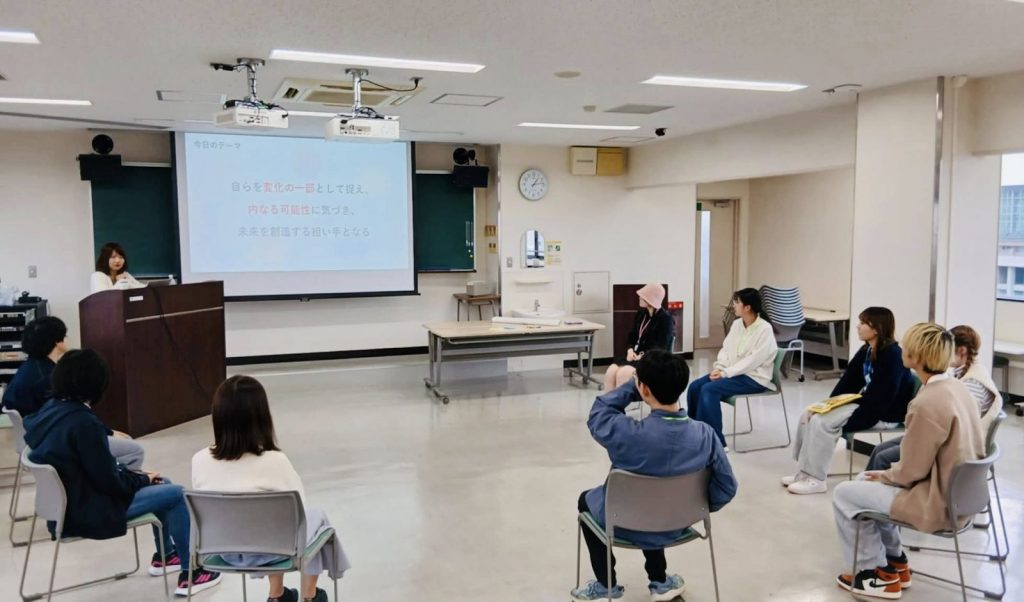
Overview
Process Work (officially known as Process-Oriented Psychology) is a comprehensive psychological approach founded in the 1970s by Jungian analyst Dr. Arnold Mindell. It is not merely a theory, but also a practical life skill for interpersonal relationships, addressing the question of “how to maintain oneself and interact with others in a society with diverse values.”
| 📂 Category | Initiative |
| 📌 Keywords | Facilitation, metacognition, systems thinking, relational intelligence, process work, deep democracy |
| 🎯 Objectives | This program helps you learn a framework for calmly assessing situations by viewing inevitable conflicts in teams with diverse values as “opportunities for growth.” You will develop meta-skills for understanding the structure of relationships and facilitation skills from a third-party perspective, while protecting yourself and remaining calm without being overwhelmed by emotions. |
| 🌐 Language | Japanese |
| 👥 Target Participants | Graduate & Undergraduate Students |
| 🗓 Format | 3 sessions (3 hours x 3, attendance for all sessions required, in-person) |
| ✅ Past & Upcoming Sessions | #1; Friday, July 3, 2026, 18:00-21:00 #2; Friday, July 10, 2026, 18:00-21:00 #3; Friday, July 17, 2026, 18:00-21:00 |
| 📍 Venue | S6-309A, Ookayama Campus |
| 🌟 Recommended for | ・People who work in teams with diverse backgrounds ・Those interested in facilitating interpersonal conflicts |
| 📊 Points | 9 points (3 points x 3 times) (Points to be awarded to students enrolled in the courses for credits. Please refer to the syllabus for details.) |
| 🎟️ Capacity | 12 participants |
Main Content
Part 1: The Fundamentals and Foundation of Meta-Skills
Theme: “Maintaining Oneself in the Conflict”
You will learn “meta-skills” (attitudes towards engagement) to understand the physical reactions and tendencies that occur when conflict arises, and to avoid being overwhelmed by emotions.
Part 2: Understanding the Framework of Perspectives and the Structure of Relationships
Theme: “Understanding the Structure of Conflict”
From a process work perspective, you will develop the ability to understand and interpret the underlying structures of conflict. You will learn models for “interpreting relationships” in situations where diverse values clash, such as in multinational teams.
Part 3: The Practice of Third-Party Facilitation
Theme: “Transforming Conflict into Dialogue”
This session will provide practical facilitation skills on how to intervene in conflicts as a third party. Participants will experience dialogue techniques that treat conflict not as something to be eliminated, but as a necessary process in the situation.
*As this is a new course, the content of the lessons may be subject to change.
Facilitator

Mizuki Kawai
Facilitator, training instructor, coach
After working in recruitment and talent development in the human resources department of an automotive parts manufacturer, she moved to an organizational development consulting firm. I have been involved in career development and organizational transformation support for management-level personnel in diverse industries, including foreign-owned pharmaceutical companies and major telecommunications groups.
She became independent in 2021, and after studying at Schumacher College in the UK, she has been pursuing studies on the new economic and social systems based on well-being. Currently, she provides practical and interactive training programs for individuals and corporations, focusing on the themes of “self-understanding” and “coexistence of diversity,” based on theories of human understanding from psychology and neuroscience, as well as process work.
Contact Faculty
Yuri Matsuzaki, Specially Appointed Associate Professor, Academy for Leadership
📩 matsuzaki.y.77a9 [at] m.isct.ac.jp