

The class of “Product Design: Thinking with Hands and Mind”, which is part of the ToTAL courses was held on July 27, 2025.
| Facilitator | Ayumu Isomura (Co-Representative of Fukufuku Plus Inc. and Shibuya Font Association) |
| Date and Time | Sunday, July 27, 13:00 –18:00 |
| Venue | S4-202, Sourth 4 Building, Ookayama Campus |
Overview
Designers and engineers think in different ways. Engineers focus on logic, certainty, and safety, while designers focus on intuition, cultural fitness, and unexpected ideas. Design thinking means adopting a designer’s mindset—thinking with your hands and body, not just your head. This workshop aimed to feel the way of designers’ thinking and provide participants with product design experience.
Activity 1: Observation (Art)
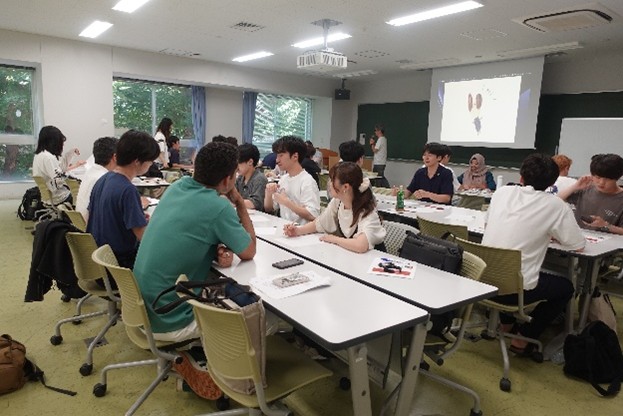
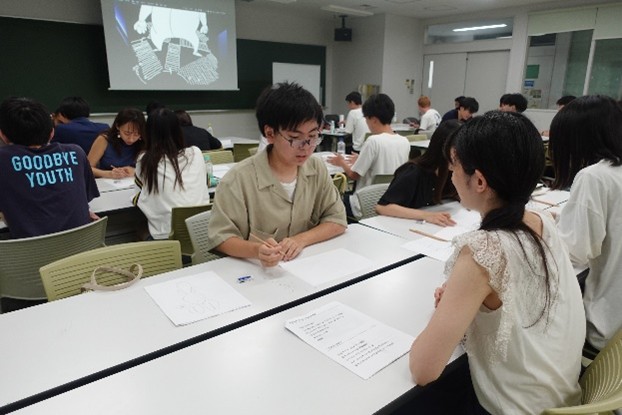
In pairs, one participant viewed an illustration on a screen and described it to their partner, who sat with their back to the screen and could not see it. The partner drew the illustration using only pencil, eraser, and paper. After 10 minutes, roles were switched. Few participants could draw an accurate illustration. This activity revealed how difficult it is to observe, interpret, and clearly communicate what one sees. Small differences in choosing words or perception can lead to very different results.
Activity 2: Observation (Behavior)
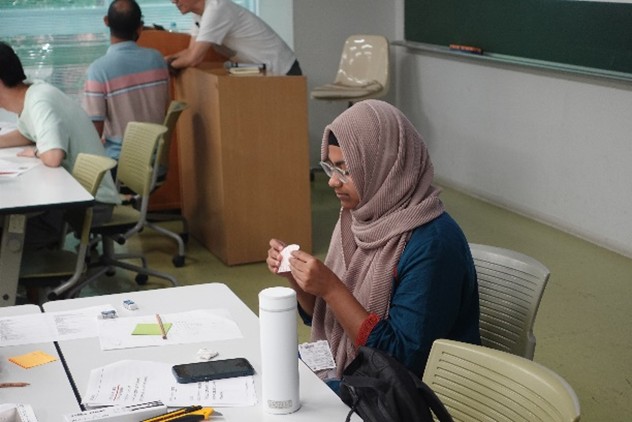
In pairs again, participants practiced using a product (“Nichiban Band-Aid”) under two scenarios: a simple situation and a difficult situation.
・Simple situation: 1) sitting on a chair without a desk, 2) sitting on a chair, and 3) wrapping a bandage around the middle of the index finger.
・Difficult situation: 1) standing up, 2) using only the left hand, and 3) trying to put a bandage on the right elbow.
The most difficult situation was designed to identify as many issues as possible related to the inconvenience of using a bandage. During the tasks, the person who acts had to keep their eyes closed, while the other carefully watched and wrote down findings. After both tried, they exchanged and discussed their notes. This activity showed how even a simple product can be hard to use in daily life, and how careful observation can reveal problems and ideas for better design.
Activity 3: Silent Brainstorming
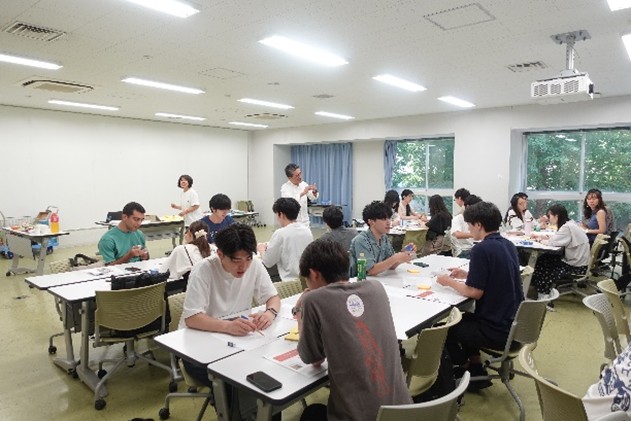
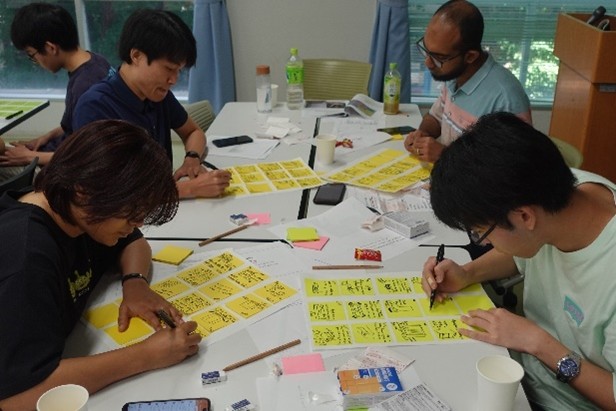
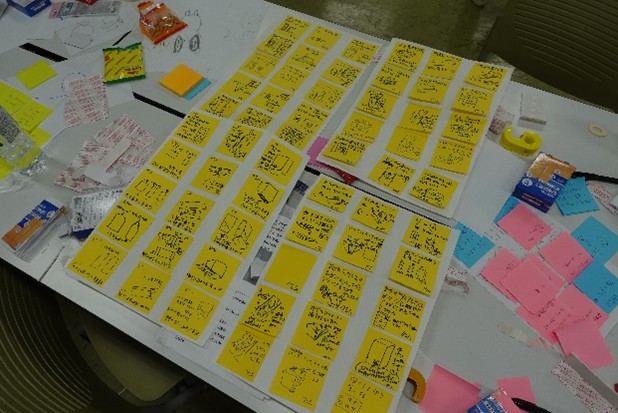
Five group members shared findings, then individually created three ideas within six minutes, drawing and explaining each on paper. These were passed around in silence for five rounds, creating a wide range of ideas in 30 minutes. Many creative ideas that might not have come up in ordinary brainstorming were designed. This method allowed participants to speak up to express ideas freely, which made it highly valuable.
Activity 4: Material Rapid Prototyping
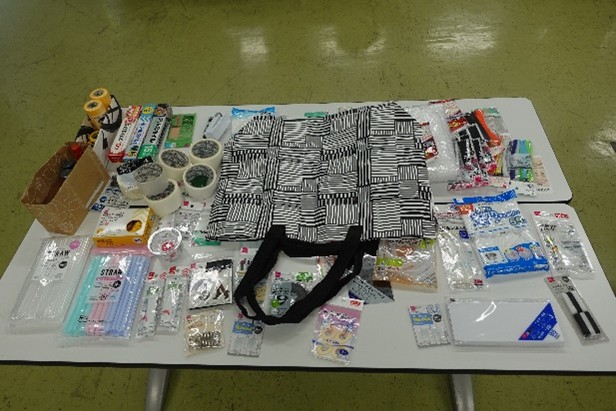
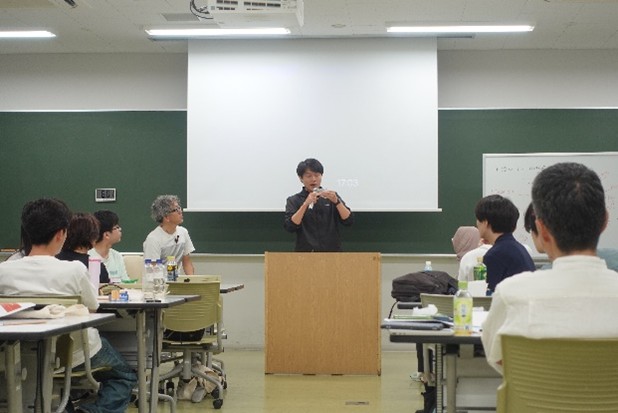
Participants used inexpensive materials purchased from a 100-yen shop to quickly design and create prototypes. The goal was to create products that could be demonstrated without relying on electric devices. At the end, each participant presented their prototype with a short demonstration.
Reflections
Through this workshop, I experienced the importance of design thinking: thinking with my hands, not just my head. In the observation activities, I realized how hard it is to communicate what I see, and how differences in interpretation can lead to unexpected results. The behavior observation exercise also made me aware of everyday inconveniences and the value of observing carefully to find hidden needs. Silent brainstorming and rapid prototyping demonstrated how moving our hands freely leads to novel ideas, and I felt that this approach could also apply my research and so on.
Additional Note
I joined this workshop as an observer. I was impressed by seeing participants create novel ideas rapidly. The process of combining simple materials to design new items showed me that creativity often emerges from action rather than just logical thinking. In my own research, I would like to adopt this “hands-on first” attitude to explore fresh and innovative ideas. I strongly recommend this workshop to those who are curious about design thinking or are interested in designing.
Written by:
Yuta Murao, D1, School of Life Science and Technology, ToTAL 6th cohort