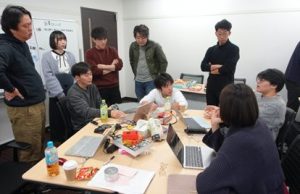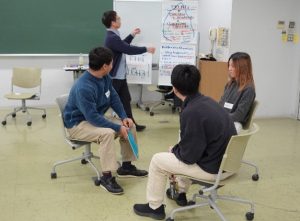

A workshop “Transforming Your Mind to Foster Innovation” was held on January 12, 2026.
| Facilitators | Osamu Fukushima, Ayumu Isomura |
| Date and Time | January 12, 2026 (Mon) 13:00–18:00 |
| Location | S4-202, South Building 4, Ookayama Campus |
Overview
In this course, we learned about the idea of “shifting our way of thinking to drive innovation”, using the metaphor of “shedding our old skin”, which means breaking free from existing assumptions and fixed ideas. In our daily lives and research activities, we tend to think unconsciously based on past experiences. While this allows us to make decisions efficiently, it can also limit new perspectives and ideas. This workshop aimed to help us move beyond these thinking patterns and become aware of various interpretations through activities focused on “observation, shifting perspectives, and dialogue”.
Activity 1:Check-in and self-introduction
Participants introduced themselves by sharing their names, majors, and what they wanted to learn from the course. They could understand each other’s interests.
Activity 2:A lecture on innovation
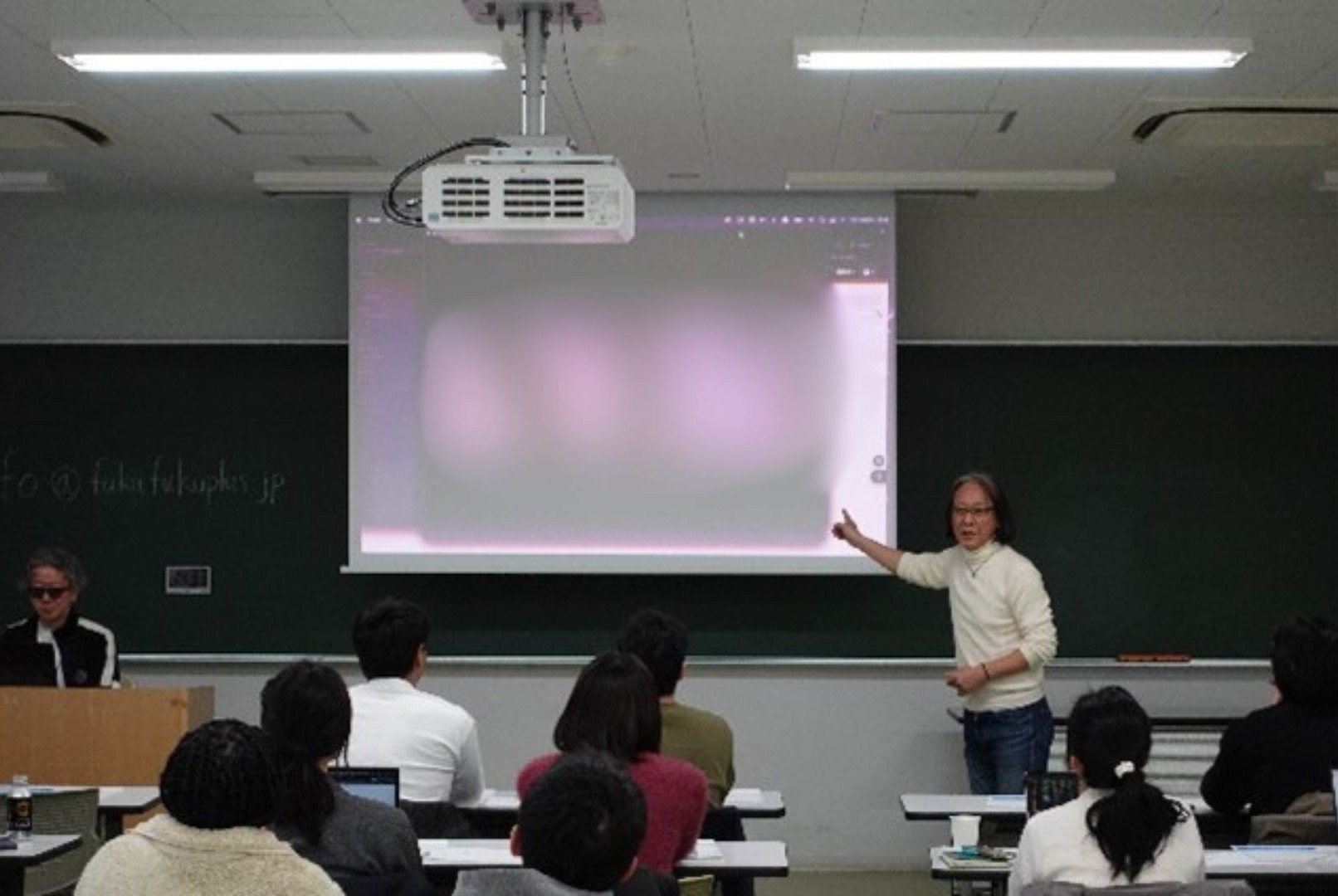
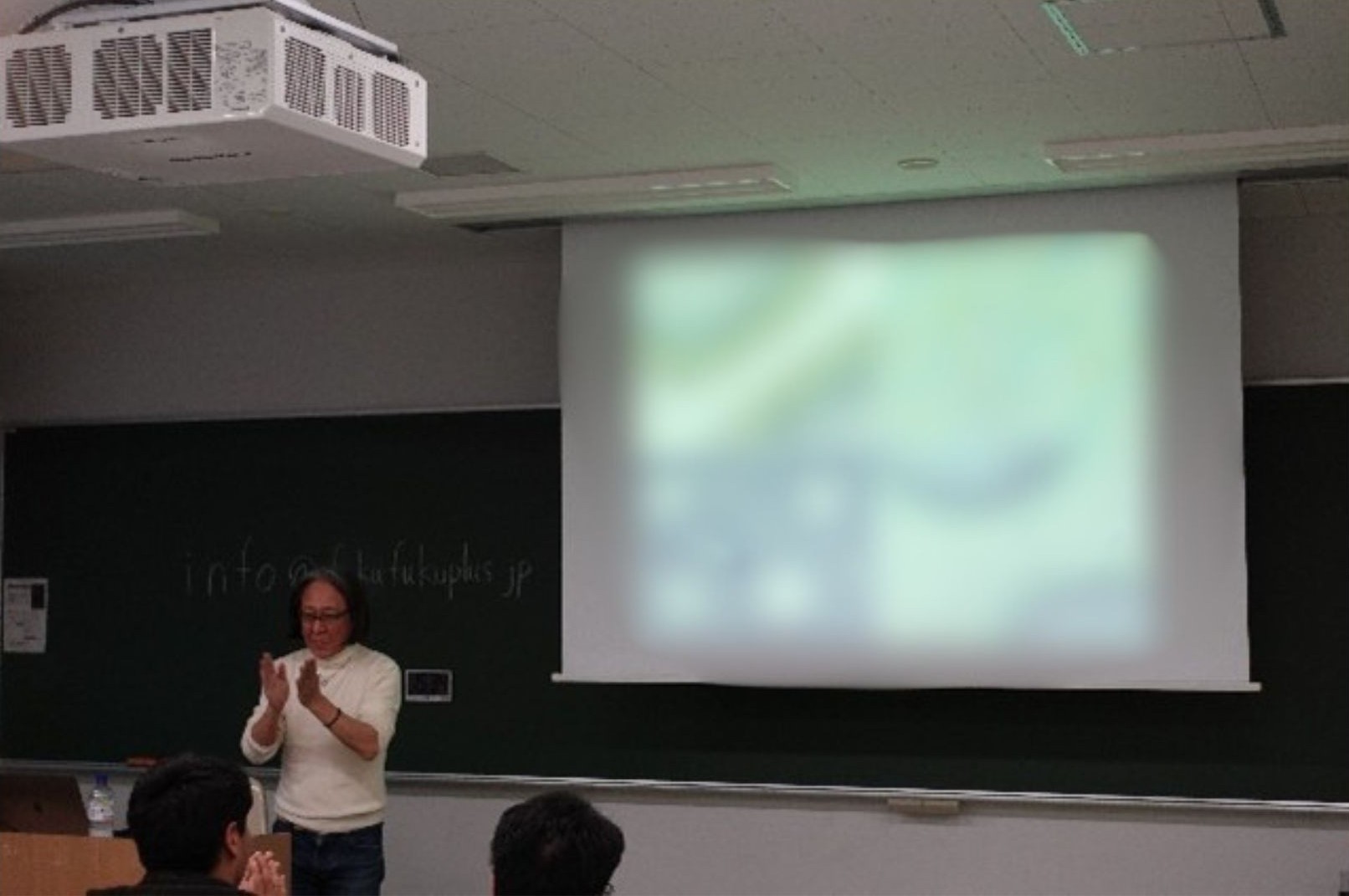
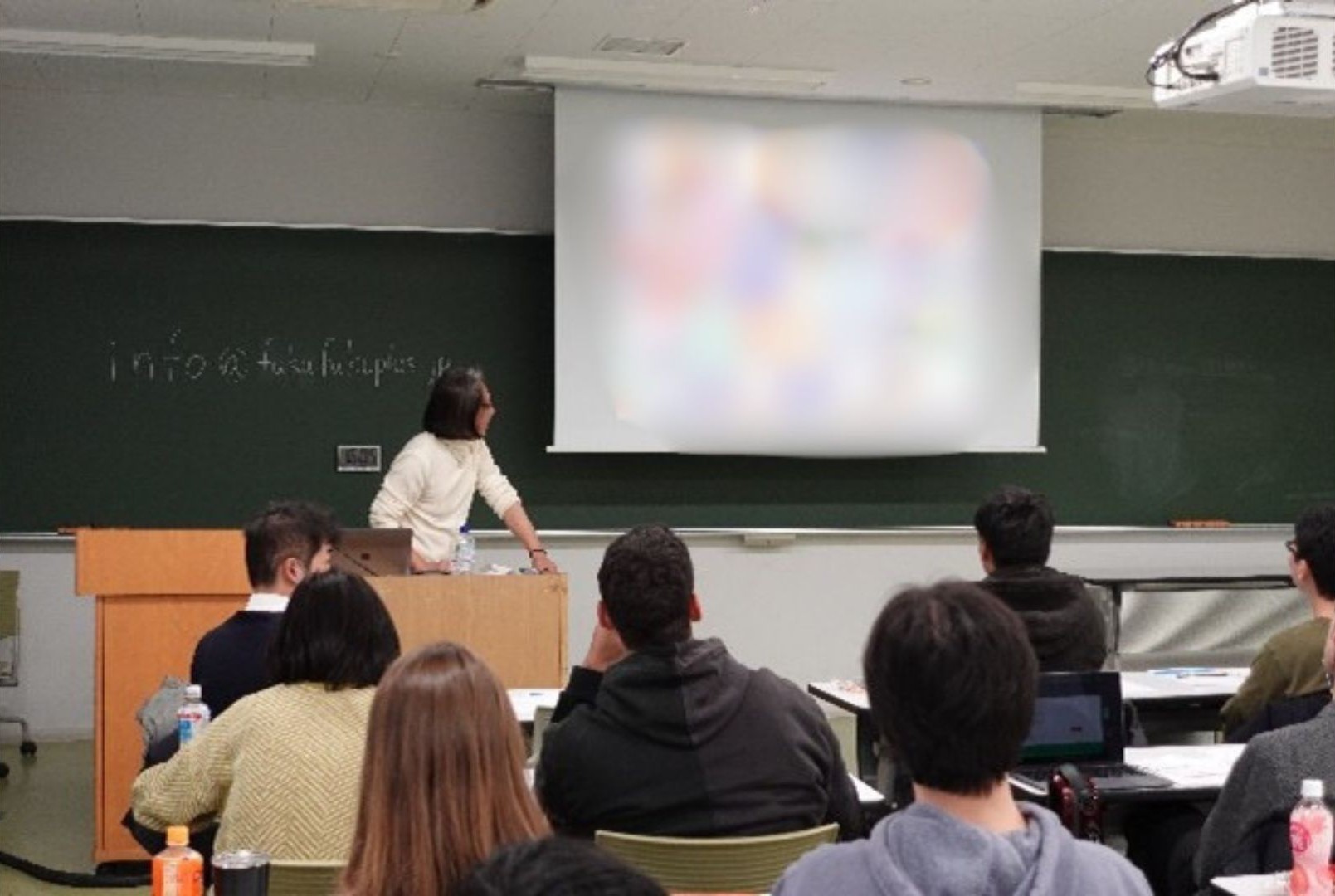
In the lecture, innovation was explained not simply as creating something new, but as emerging from “new combinations of existing elements and shifts in perspective”. It was also emphasized that people tend to think unconsciously based on “common sense” and assumptions, which can become barriers to new ideas. To overcome this, it is important to “question assumptions, shift perspectives, and combine different ideas”. The workshop was designed as a practical opportunity to experience these ways of thinking.
Activity 3:Observation and discovery to shift perspectives
In this activity, we conducted fieldwork on campus and observed familiar surroundings from a different perspective. Within 30 minutes, we were asked to explore the campus and find ten unique examples of the simulacra phenomenon. The simulacra phenomenon refers to the phenomenon to perceive faces in random shapes or patterns that originally have no meaning. During the observation, we noticed that objects such as windows, pipes, and wall patterns sometimes appeared like faces. This made us realize that even in everyday environments, there are many instances of simulacra.
Through this activity, we learned that by changing our perspective, the same object can be interpreted in completely different ways. After the fieldwork, each participant presented their findings. It was impressive to see that even when walking through the same place, people noticed very different things. By sharing these diverse perspectives, we were able to find new ways of seeing.
Activity 4:Case study: Innovation in the welfare field
In this activity, we examined case studies of innovation in the welfare field, including projects such as “Shibuya Font” and “Local Font” business that utilize artwork created by people with disabilities. In these projects, characters and illustrations created by individuals with disabilities are transformed into fonts and design materials, and they are used in products and advertisements in collaboration with companies and local governments. What I found important in these examples was that they go beyond the traditional framework of “welfare means support” and create a new model of “welfare and business.” While welfare activities are socially meaningful, they often face challenges in terms of profitability and sustainability. However, these businesses generate economic value through the creativity of art, making the activities more sustainable. Also, they regard people with disabilities not as “supported people”, but as “creators of value”. From these case studies, I learned that innovation comes from not simply developing new technologies, but also questioning existing frameworks and changing perspectives.
Activity 5:Interactive art observation
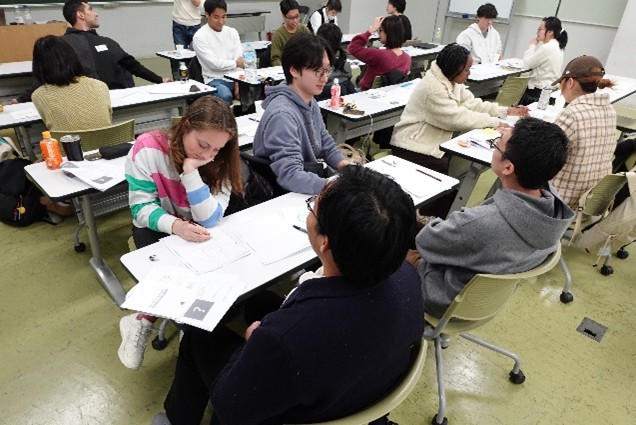
We conducted an interactive art observation activity using artworks. The purpose of this activity was not to acquire knowledge about art, but to develop skills such as “observation, shifting perspectives, creativity, and communication skills”, and to experience ways of thinking that lead to innovation. There were no “correct answers” to the artworks. Instead, we focused on “how we observe and interpret them”. The details of each training activity are the following.
・[Training 1: Imagining sounds]
We observed four artworks and individually thought about “what kinds of sounds we could hear and what those sounds might represent”. After that, we shared our ideas with the class. Even when looking at the same artwork, completely different sound images emerged, which showed that people interpret things very differently. This activity emphasized the importance of moving from observation to shifting perspectives and creativity.
・[Training 2: Creating dialogue for characters in the artwork]
We looked at a painting and created dialogue for the characters in it. Instead of simply describing what we saw, we imagined “what the characters were thinking and what kind of situation they were in”. This activity required us to build stories based on observation, and it was impressive that completely different stories were created from the same image. This exercise emphasized the importance of developing creativity and storytelling from observation.
・[Training 3: Communicating art only with words]
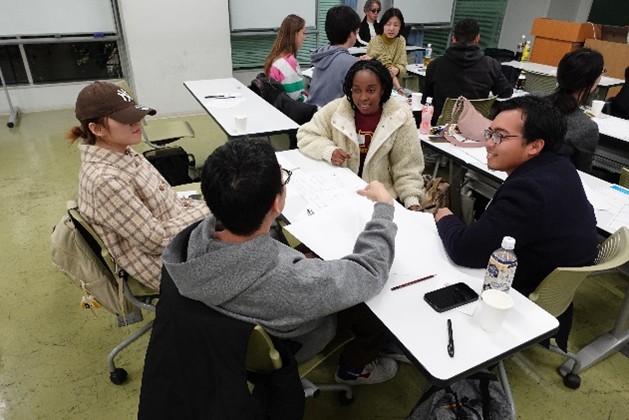
In pairs, one person looked at an artwork while the other faced away from it, and the first person described the artwork using only words within seven minutes. At first, questions and gestures were not allowed, so we experienced one-way communication. Then, we switched roles and repeated the activity allowing questions. As a result, we found that without questions, misunderstandings easily occurred, whereas allowing questions greatly improved mutual understanding. From this activity, we learned that innovation requires not only creativity but also communication skills.
・[Training 4: Creating the happiest stories]
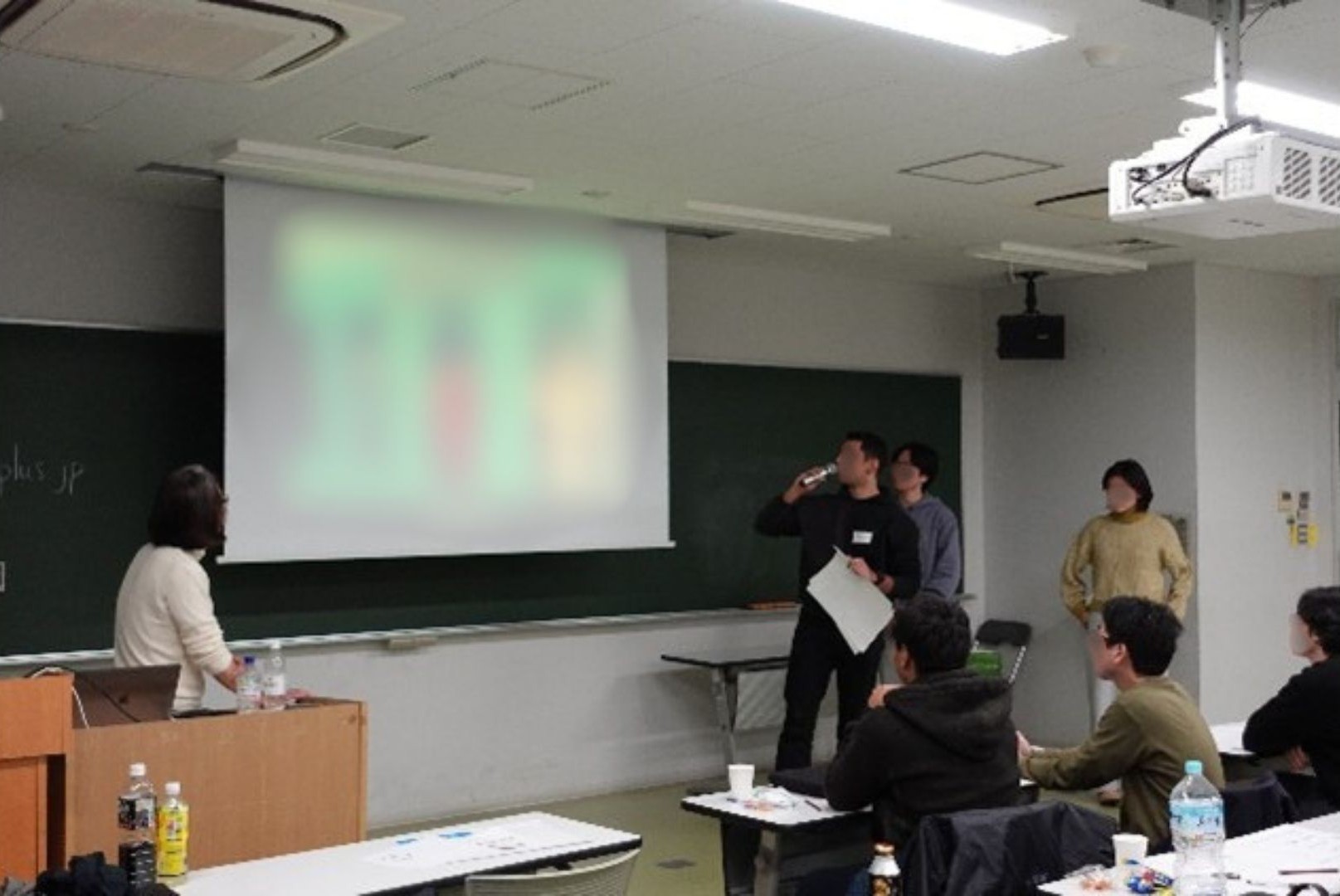
Based on a given image, we imagined “what would happen next”. First, each person created five “happiest” stories, and then five “worst” stories. After that, we shared ideas in pairs, selected the best one, and finally created and presented one story as a group. Through this activity, we realized that thinking about worst stories expands our thinking significantly, and then imagining the happiest stories leads to more original ideas. Thus, we learned that considering extreme negative situations helps our thinking make bigger leaps.
Through these training activities, I realized that because there are no correct answers in interpreting art, it encourages us to question our own assumptions and explore new perspectives. I felt that this process of breaking free from fixed ways of thinking is the essence of innovation. In addition, through dialogue with others, I experienced that taking diverse perspectives allows us to reach ideas that we could not achieve on our own. These activities also taught me that both logical thinking based on data and observation, and the ability to make creative leaps, are both essential for innovation.
Reflection
Through this workshop, I strongly realized how much my thinking is influenced by fixed assumptions. What impressed me most was that even things I usually observe can have many different interpretations. Through the various art-based training activities, I also learned that both observation and creative thinking are essential for innovation. In particular, the experience of thinking about worst stories was very impressive. It made me realize that intentionally considering the worst situations can help us expand our thinking. Furthermore, through dialogue with others, I was able to listen to many ideas.
From these experiences, I came to understand that innovation is created through processes such as “questioning assumptions, shifting perspectives, and taking the viewpoints of others”. In my future research, I would like to make a conscious effort not only to interpret experimental results and data, but also to consider whether alternative interpretations may be possible.
Additional Note
I participated in this workshop as both an observer and a participant, and I was impressed that the participants’ ways of thinking gradually changed through each activity. First, many participants hesitated to speak because they were trying to find the “correct answer.” However, as they engaged in more dialogue and activities, they began to express their own interpretations more freely. I strongly recommend this workshop to those who want to break free from fixed assumptions, generate new ideas, and improve their observation skills and flexible thinking.
Written by:
Yuta Murao, D2, School of Life Science and Technology, ToTAL 6th cohort