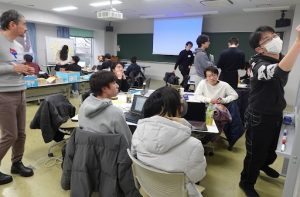

The Enneagram Workshop for ToTAL Course "Fundamental Group Work for Leadership" was held on October 19, 2025.
| Program Name | Enneagram Workshop(Discovering the blue print of your true self) |
| Facilitator | Hiroki Matsuda, Collective Souls Inc. |
| Date & Time | Monday, October 19, 2025, 13:00–18:00 |
| Location | S4-202, 2nd Floor, South Building 4, Ookayama Campus |
| Faculty in Charge | Mayu Watanabe |
Overview
The Enneagram is a diagnostic tool designed to help you understand yourself and explore what you want to pursue in life. It categorizes innate human temperaments into nine personality types, illustrating each type's potential and core characteristics in a diagram. These core characteristics include worldviews, internal motivations, thoughts, emotions, behavioral patterns, strengths, challenges, interpersonal styles, and work preferences. Understanding these fosters a deep appreciation of both oneself and others. Widely adopted by universities and corporations globally, the Enneagram is ideal for students seeking deeper self-knowledge.
• Keywords: Reflection / Self-Analysis / Interpersonal Relations
Activity 1: Introduction
We learned about the career of our facilitator, Mr. Matsuda. After studying at Keio University, he worked as a researcher primarily in Japan and the US before founding Collective Souls Inc., a company supporting startup launch and growth. Through these experiences, he acquired a broad range of skills spanning research, entrepreneurship, management, and consulting. In the lecture, he shared valuable insights on what true success means and the critical importance of self-understanding as we navigate life.
Activity 2: Life Line Exercise (Life Reflection Activity)
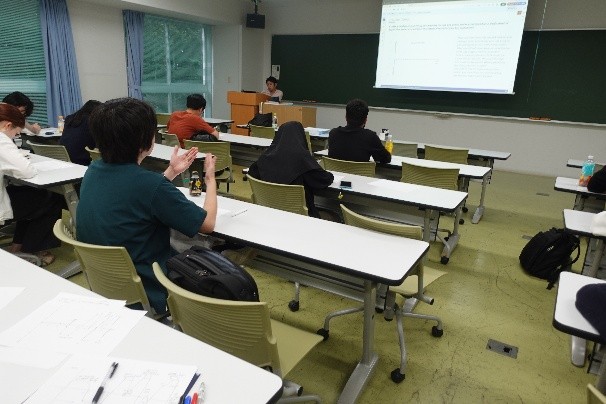
We reflected on our entire lives up to the present, including childhood—quantifying and evaluating major personal events and corresponding emotions at each age to create a graph. Afterwards, we shared our findings with other participants. Looking back, my childhood was an emotionally negative period due to school life not going smoothly. However, from high school onward—when I gained autonomy over my choices—the opportunities to enjoy life increased. While my graph depicted a life with sharp emotional swings, other participants' graphs varied greatly, showing zigzag patterns or flat lines. This highlighted how distinctly individual personalities and mindsets emerge through the exercise. For instance, a Korean international student shared that even during an intensely competitive exam period—harder than Japan's—they didn't view it negatively because they felt it was for their own future. Another participant mentioned that although they weren't busy, they couldn't do what they wanted, making it a mentally painful period. It was fascinating to see how people interpret and navigate similar life events differently.
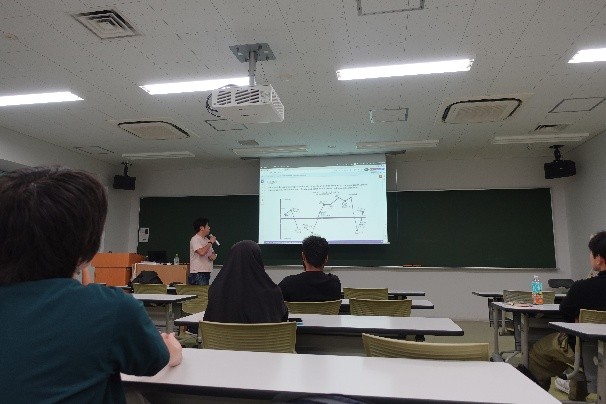

Instructor's Life Line
Sharing own Life Line with the class
My Life Line graph: Had two exam periods where my emotional state dropped greatly
Activity 3: Flow Exercise
We recalled and shared experiences of entering a "flow state"—being so absorbed in an activity that one loses track of time and surroundings. Group discussions examined specific actions, emotions felt at the time, and reasons for entering that state. I learned that reflecting on flow states helps deepen the understanding of one's aptitudes and unique personality. Although I rarely thought about flow states beforehand, I realized that for me, getting completely absorbed in drawing or lab experiments fit the description. Other members brought up music club activities or theater productions, making this a great opportunity to learn what sparks people's interest and gives them a sense of purpose.
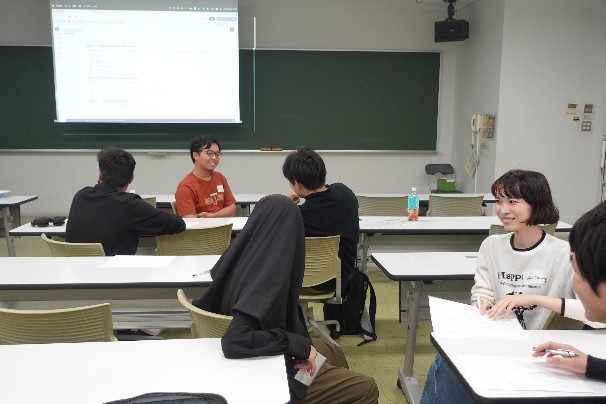
Sharing in groups
Activity 4: Enneagram Session
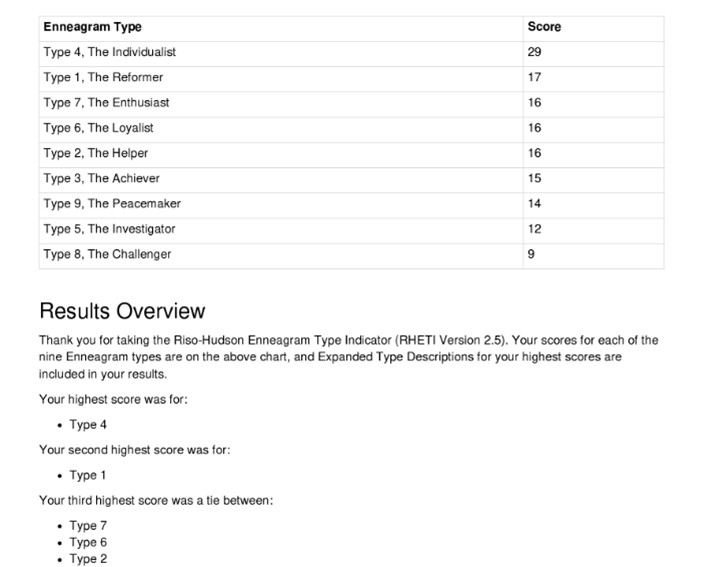
Finally, we took the Enneagram assessment and shared our results in groups. Answering nearly 100 questions calculates a numerical score indicating which personality type you align with. Unlike the MBTI, the Enneagram displays scores across all Types 1 through 9. As a result, even if two people share the same primary type (highest score), their distinct personalities can be clearly differentiated and analyzed by examining secondary scores. Receiving a detailed report of nearly 30 pages post-assessment highlighted how rigorous the diagnostic tool is. When shared across the class, almost all types were represented. It was intriguing to see some people having seemingly contrasting types side-by-side as their top two (e.g., Type 9 and Type 1). Lively discussions ensued regarding which environments (clubs, labs, school, etc.) brought out these traits, creating an engaging atmosphere across the entire class.
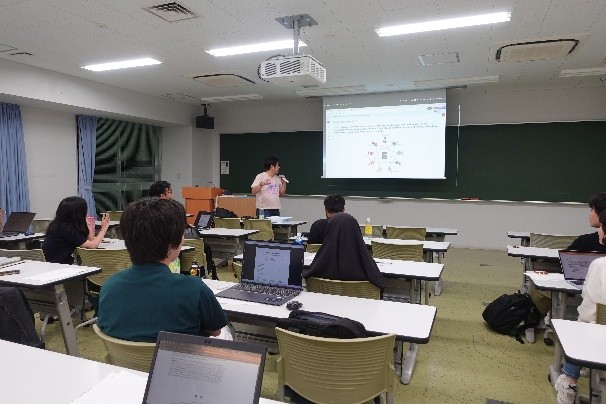
Mr. Matsuda explaining the Enneagram
My Enneagram results: Type 4 scored highest, but other elements partially applied as well. Subsequent pages provided detailed descriptions of personality traits and compatibility with other types.
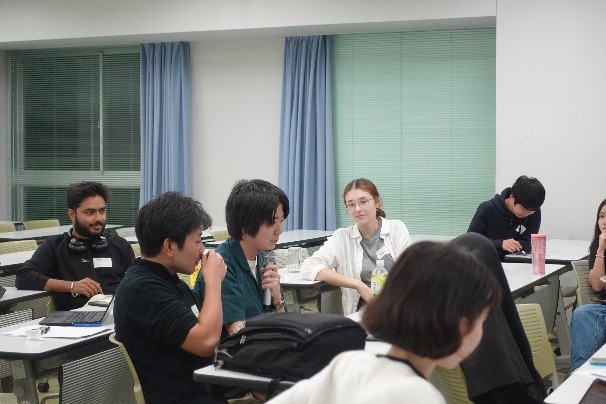
Overall view of the class
Reflections
Throughout the entire session, we were able to reflect deeply on ourselves and our past lives. Opportunities to share one's life story, emotions, and personal values with others are rare, making this truly valuable experience. Additionally, learning about the deep inner thoughts of group members—aspects rarely uncovered in daily conversation—helped build mutual understanding. Given the abundance of personality tests today like blood types, horoscopes, and MBTI, I was somewhat skeptical of the Enneagram before attending. However, the analysis proved to be exceptionally thorough. Even if it doesn't match 100%, I realized it is an useful diagnostic method for navigating interpersonal relationships and planning for the future.
Written by
Aoi Ishikawa, M2, School of Life Science and Technology, ToTAL 7th cohort