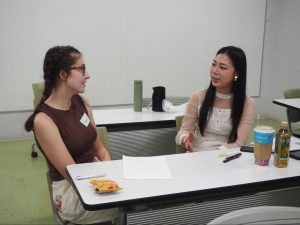

Systemic design is a methodology that combines the theory of Systems Thinking with the practical methods of Design Thinking to view difficult and complex problems as systems, consider the related elements and interactions, and design solutions. It incorporates the perspectives of multiple stakeholders, analyzes the problems of the target system from a bird's-eye view, moving back and forth between parts and the whole, and considers sustainable and useful solutions.
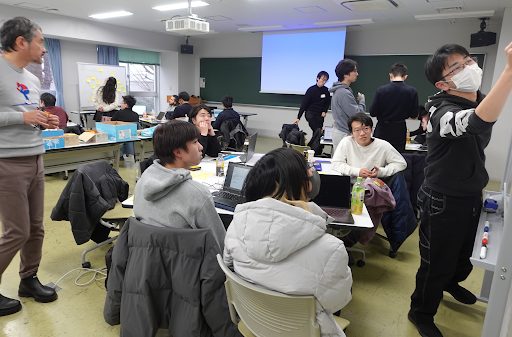
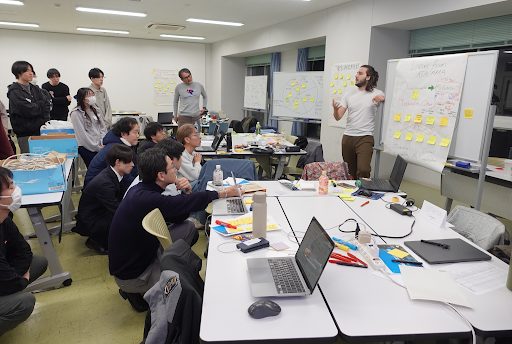
Overview
Systemic design combines the theory of Systems Thinking with the practical methods of Design Thinking to approach complex problems, and is attracting attention as a useful method in a variety of fields, including social change, the design of complex social systems, business and policy formulation, and environmentally friendly ecosystems. Systemic design involves diverse stakeholders, uses Systems Thinking to understand complexity, discovers effective solutions to problems through a design process, and encourages reflection on one's own behavior and mental models within the system through repeated experimentation and iteration.
| 📂 Category | Innovation |
| 📌 Keywords | System Thinking, Design Thinking, Issues Identification |
| 🎯 Objectives | Rather than viewing the methodologies of "Systems Thinking" and "Design Thinking" as a "how-to," we train students to correctly extract the complex elements and issues and use them to design complex social systems. |
| 🌐 Language | English & Japanese |
| 👥 Target Participants | Bachelor, Master and Doctoral students |
| 🗓 Format | Single session(8-hour in-person) |
| ✅ Past & Upcoming Sessions | 9/Feb/2027 (Tue) 10:00-18:00 |
| 📍 Venue | S4-202, Ookayama |
| 🌟 Recommended for | - Students who want to use "Systems Thinking" and "Design Thinking" methodologies to solve social issues. - Students who want to gain experience in creating new values for society. - Students who want to take some kind of action against global warming. |
| 📊 Points | 7 points (Points to be awarded to students enrolled in the courses for credits. Please refer to the syllabus for details.) |
| 🎟️ Capacity | 40 participants |
Main Content
Workshop Theme: “Can the oceans become more abundant by 2050?”
Envisioning the future relationship between the sea, the local community, and future generations—starting from the waters of Zushi and Hayama.
A future-envisioning workshop combining Systemic Design and Future Design.
- Coastal waters are facing significant changes due to factors such as rising sea temperatures caused by climate change, the loss of seaweed beds (“isoyake”), and the decline of marine vegetation. These impacts extend beyond marine ecosystems to affect fisheries, local industries, tourism, and people's daily lives. However, focusing solely on immediate issues risks overlooking the underlying connections and the societal systems that give rise to these problems.
- In this workshop, we will envision the future of the year 2050, using the waters and communities of Zushi and Hayama as our case study.
- In the first half of the workshop, students will understand the principles of systemic design, and study the interconnections between environmental changes in the ocean and various sectors—including fisheries, industry, tourism, institutional frameworks, and people's lifestyles and behaviors. Students are being expected to explore not only individual issues but also the underlying structures and previously unseen relationships at play.
- In the second half of the workshop, students will utilize the concepts of "Future Design" to envision a future—from the perspective of the generations living in 2050—where the marine ecosystem is thriving and local industries and communities are sustainable. Then students are being expected to look back at the present from that future vantage point to consider the changes necessary to move toward this desirable future.
Facilitator
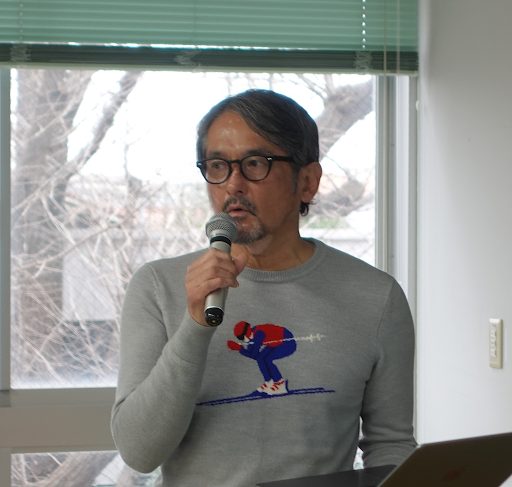
Yutaka Iimori
After gaining experience in the foreign IT industry, he moved to Silicon Valley in 1999. He participated in the founding of a startup (now Google) during the dawn of the internet era. He then worked for a foreign marketing company before going independent.
• Master's degree in System Design and Management (SDM) from Keio University Graduate School
• Master's degree in Media and Governance from Keio University Graduate School
• Completed the i.school Innovation Education Program from the University of Tokyo
• Researcher at the Keio University Institute for System Design and Management
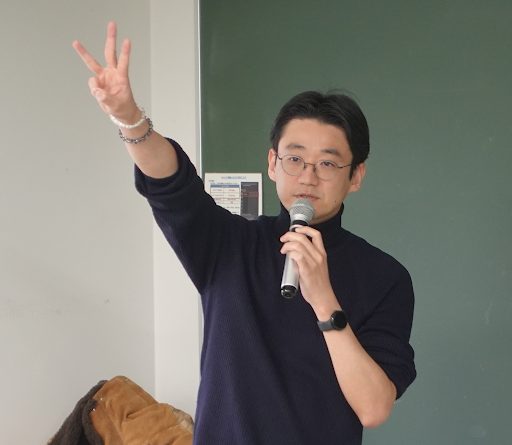
Kazuya Sawai
Born in 1986. After graduating from the Graduate School of Science and Engineering in 2011, he worked in the manufacturing industry as a mechanical design engineer. Since 2021, he has been the division manager of the e-commerce apparel business, managing the entire business with a focus on web marketing/CX.
He went independent to update creativity in both corporate and educational settings. He currently works as a freelancer, designing and facilitating workshops for innovation.
• Master's Degree (Engineering) from the Graduate School of Science and Engineering, Keio University
• Master's Degree (SDM) from the Graduate School of System Design and Management, Keio University
• Researcher, System Design and Management Institute, Keio University
Past Event Records
Voices from Participants (2025, Workshop Theme: New Common Sense for Resource Circulation: Turning Cities into Forests)
- This workshop helped improve strategic thinking, and I would recommend it to my colleagues.(D2)
- It's recommended for you who want to broad your way of thinking. Not only understand through lecture, but also real-world example that simulated by the game. Good luck if you join this workshop. (M1)
- Yes, I would recommend this workshop. I find it very interesting and a nice approach to sustainability topics and their possible interconnections between different careers, starting from the diversity of participants and the creative method for the group activities. (M1)
- Yes! This workshop is a good learning opportunity to tackle problems through the lens of various frameworks, which help us understand the problem better (M1)
Event Report
Contact Faculty
Keisuke Yamada, Specially Appointed Professor, Center for Entrepreneurship Education
📩 yamada.k.9f82 [at] m.isct.ac.jp