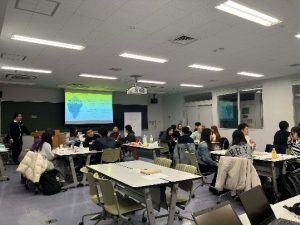

A workshop “Storytelling for Researchers” (the entrepreneurship program) was held on April 26, 2026.
| Facilitator | Takeo Endo(CroMen Inc.) |
| Date & Time | April 26, 2026 (Sun) 14:00–17:00 |
| Location | S4-202, South Building 2, Ookayama Campus |
Overview
In this workshop, we learned practical storytelling methods under the theme of “communicating research to others”. The goal of the workshop was to get understanding, empathy, and cooperation from others regarding our research. In research communication, it is important not only to explain research information itself, but also to consider “whom” we are speaking to and “how” we communicate it. To help participants express their research clearly and encourage listeners’ understanding, memory, and empathy, the workshop conducted practical activities, lectures, worksheet exercises, and one-on-one dialogue sessions. In particular, participants focused on three elements (research content, concrete examples and why we conduct the research) and practiced presenting research as a story that could be easily understood by others.
Activity 1:Opening lecture
In the lecture, we first learned why storytelling is important for researchers. Research activities involve collaboration with many different people and organizations, such as governments, research institutions, companies, and laboratory members. Therefore, researchers need the ability not only to explain their research, but also to help others understand it, feel empathy toward it, and become willing to cooperate. So, simply conveying facts and data accurately is not enough. Researchers must explain their work in a way that is easy to understand and memorable for listeners.
In addition, presenting research as a story makes it easier for people to understand and remember the content, encouraging listeners to empathize and take action. Also, as effective elements of storytelling, understanding whom we are speaking to, explaining ideas simply and clearly, sharing the motivation and background behind the research, and appealing to the emotions of listeners are introduced.
Activity 2:Worksheet exercise
We worked on expressing our own research by focusing on three points (research content, concrete examples and why we conduct the research). In particular, we were advised to explain our research using familiar examples so that even people majoring in other fields can understand it, and to clarify the emotions and motivations behind our research. In addition, by using a worksheet about our experiences when we think about “why we want to conduct the research”, we looked back on our past experiences and emotions. Through this process, we organized our values and thought more deeply about the source of our research motivation.
Activity 3:Group work (sharing worksheet content)
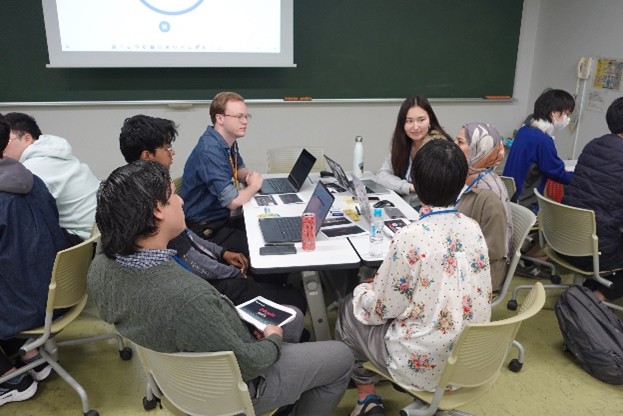
Participants introduced themselves and shared the content of their worksheets in groups. By sharing with others, we found new perspectives and insights on parts that were difficult to organize or explain. In addition, by observing how other participants talked about their research, we improved our own communication style.
Activity 4:Lecture and practice of one-on-one dialogue
Before the practice, we learned the purpose and methods of one-on-one dialogue through lectures. In this activity, the goal was not simply to explain research content, but to “involve others in our research project”. Therefore, participants needed to communicate in a way that would attract listeners’ interest and empathy. The lecture also introduced important points for effective dialogue, such as being considerate but not overly hesitant, accepting feedback as a gift from others, and understanding that self-disclosure strongly affects the quality of feedback.
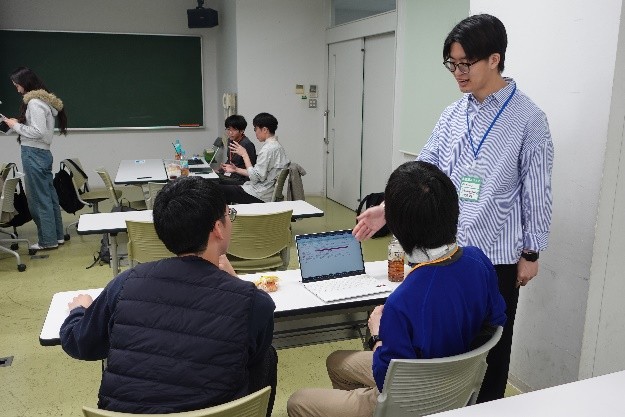
After that, participants formed pairs and practiced explaining their research as a story, changing roles. The dialogue began with self-introductions, followed by explanations of their research based on the worksheets, questions, and finally, reflection.
During the first dialogue session, many participants realized through questions and feedback from listeners that their explanations were difficult to understand because they used many technical terms. In the second session, participants improved the structure and the way they told their stories based on what they had learned in the first session. As a result, by reducing technical terms, using clearer examples, and explaining more carefully why they wanted to conduct the research, participants experienced better understanding and more positive reactions from listeners. Through this process, we learned that the way we communicate influences others’ understanding and empathy. We also realized how each story improved through repeated dialogue and feedback.
Activity 5:Group work (reflection)
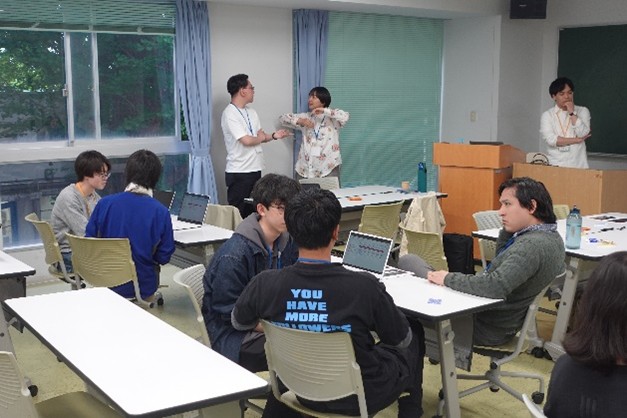
Participants shared the insights they gained through the one-on-one dialogue sessions in their groups. By listening to the improvements and ideas of others, we learned points about where we could improve and important points to keep in mind when we conduct storytelling. In addition, we were able to deepen our understanding by sharing our learning with others.
Activity 6:Closing
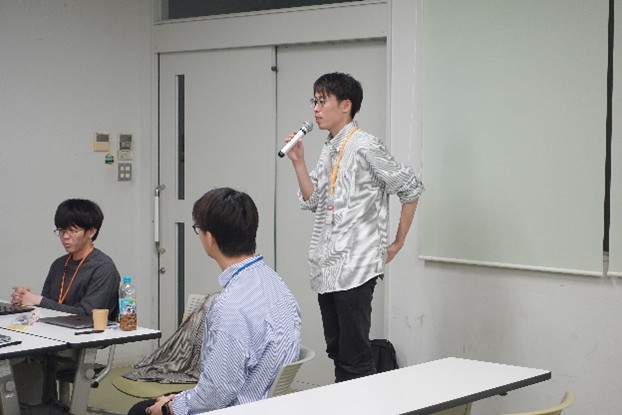
At the end of the workshop, participants shared what they had learned throughout the day. Through the activities, we were able to understand the importance of storytelling and the key points for communicating research to others.
Reflection
Through this workshop, I strongly realized that “explaining research accurately” and “explaining research in a way that others can easily understand” call for very different skills. Until now, I had focused mainly on explaining accurately. However, I learned that this alone is not enough to gain understanding and empathy from listeners, and that it is important to consider who I speak to when communicating. During the one-on-one dialogue sessions, I realized that listeners reacted very differently when they included content experiences and feelings in the explanation. Furthermore, through feedback, I found improvements and learned the importance of thinking from the listener’s perspective. In the future, I would like to apply these methods (explaining ideas clearly through storytelling) to research presentations or daily communication by considering “who I am speaking to” and “how to make my story resonate with them”.
Additional Note
I participated in this workshop as an observer, and I was very impressed by how the participants’ explanations of their research gradually became easier to understand through one-on-one dialogue sessions. At first, many explanations contained many technical terms and were difficult to understand. However, through dialogue and feedback, the participants improved their stories to make them more interesting for listeners. I strongly recommend this workshop to researchers who want to communicate their research more clearly to many people and involve others in their research projects.
Reported by
Yuta Murao (D2, Department of Life Science and Technology, ToTAL 6th Cohort)