
| Facilitator | Makiko Imai Certified NVC Trainer, Consultant/Coach/Facilitator/Writer, ORSCC Systemic Coaching certified Seiji Nagata Representative of Restorative Circles Japan, Conflict Resolution Facilitator, Graphic Harvester |
| Date & Time | Day 1: Friday, January 9, 2026, 17:00–20:00 Day 2: Friday, January 16, 2026, 17:00–20:00 |
| Venue | S6-203 (Day 1) and S6-308 (Day 2), Ookayama Campus |
Objective
Rather than shying away from a lack of mutual understanding, we will use NVC principles to gain a fresh perspective. We will investigate how these methods can be applied to miscommunications in research settings and technical debates in society, paving the way for enhanced cooperation.
Overview
Communication is the foundation for how people with diverse values and conflicting opinions understand and cooperate with one another. Among various communication skills, NVC is gaining attention as a highly practical and effective method. Mastering these skills will give you confidence in your future research, friendships, and professional projects. For this event, we have invited two NVC specialists for a two-day intensive workshop.
Day 1: Friday, Jan 9, 2026
Activity 1:Discussion on Leadership and Communication
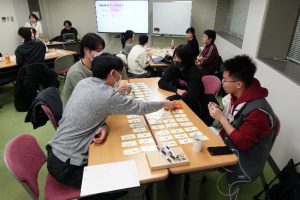
Groups of four discussed: "What does leadership mean to you?" and "Why is communication vital for leadership?"
Key takeaways included "Communication can:
・resolve misunderstandings."
・build trust and psychological safety."
・align teams toward goals."
・enable accurate "visualization" of ideas."
Activity 2: Lecture on NVC
While leadership is often associated with strength, the ability to face "vulnerability" is becoming crucial for innovation. NVC (Nonviolent Communication) is a way of communicating without physical or psychological harm. "Violence" here refers to judging others based on your own values or blaming them by labeling actions as "right" or "wrong." NVC supports non-hierarchical, collaborative communication.
Activity 3: Reflections on the Lecture
Participants shared their thoughts on how tone and framing can become "violent." For example, saying "You are wrong" is violent, whereas "I disagree with your opinion" is non-violent. Participants noted that even well-intended discussions can lead to further division if they become violent.
Shared Reflections:
・ I found it interesting that there is violence in communication, and that NVC (Nonviolent Communication) was developed to avoid it.
・Even when the goal is to "talk it out" to avoid violence, it can sometimes become violent and lead to division rather than resolution.
Activity 4: Elements of NVC
Introduction to the four components of NVC: Observation, Feelings, Needs, and Requests. The session concluded with an analysis of what triggers emotions through storytelling.
Analysis of emotion
NVC embraces both happiness and sadness as important. Negative emotion itself tends to be taken pessimistically but “sadness” and “rage” warn you that something important is happening to you and they should not be dismissed.
Example:
You arranged to meet Seiji. However, he arrived 10 minutes late without letting you know and that made you feel angry.
Q: Are you angry because of Seiji?
A (Student): You feel angry because you were confused and inconvenienced by your friend’s lateness. However, if you had something else to do and were running 10 minutes late yourself, you wouldn't be offended when Seiji arrived late. So, the anger you feel is rooted in your own internal state.
Like this case, when you experience negative emotions, it is crucial to analyze why you feel that way and to observe your mental state objectively. Understanding yourself in this way is key to preventing a situation from deteriorating.
Activity 5: Analyzing Emotions and Needs
Whenever our emotions are stirred, it indicates whether our "needs" are being met or unmet. Using a "Needs List" and a "Self-Empathy Sheet," we explored the emotions we feel and the underlying needs beneath them. After completing the sheets individually, we shared our thoughts within our groups and with the entire class.
Key Reflections:
・Identifying underlying needs is more difficult than expected.
・Conflicts arise because everyone has different needs.
・Understanding the needs of others might help in managing one's own anger.
Activity 6: Empathic Listening
While listening is crucial for effective communication, few people truly master it. We often listen through the lens of our own interpretations, which can hinder our understanding of others. True communication happens when we listen for the feelings and needs at the root of someone’s story and reflect them back to the speaker.
Activity 7: Empathic Listening Practice
In pairs, each person spoke for 10 minutes while the partner practiced "empathic listening." I participated in this activity and noticed that when my partner gave strong reactions or asked insightful questions, I felt they were genuinely interested in my story, which lifted my spirits. It made me realize why so many self-help books emphasize that listening skills are of paramount importance.
Reflections
In the modern era, while online connectivity has increased, opportunities for face-to-face conversation have decreased, leading to a diminished awareness of how to avoid hurting others' feelings. I believe that by calmly analyzing our own mental state and circumstances, we can achieve better communication for both ourselves and others, whether in person or online.
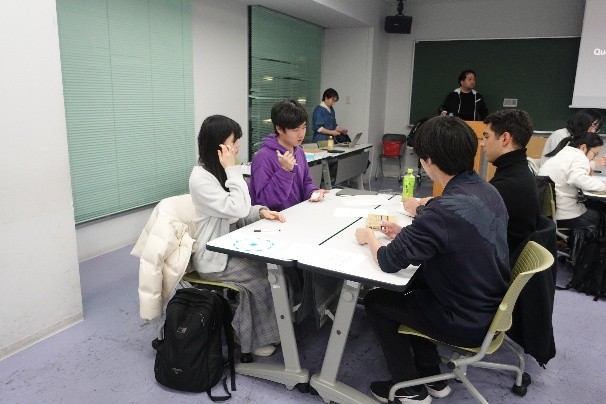
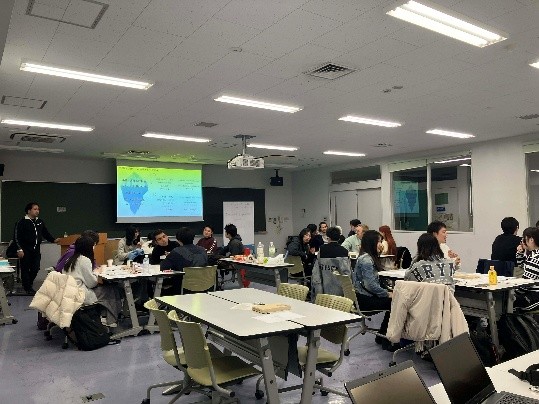
Active discussion in the lecture
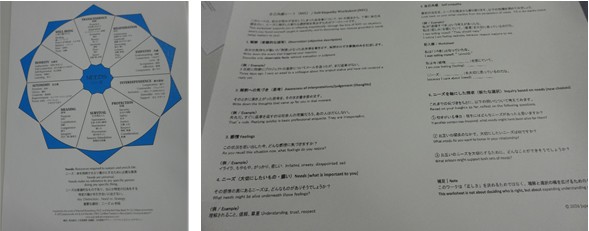
The sheet to analyze needs.
Written by
Aoi Ishikawa, M2, School of Life Science and Technology, ToTAL 7th cohort